

Fingerboard radius is a critical aspect of guitar that is one of the main influences on playability, comfort, and overall performance. It refers to the curvature of the fingerboard, determining how flat or round it feels beneath your fingertips. Selecting the appropriate radius can significantly impact your playing technique and the ease with which you navigate the fretboard. In this post, we will explore the different options available and discuss the factors to consider when choosing the right fit for your playing style.
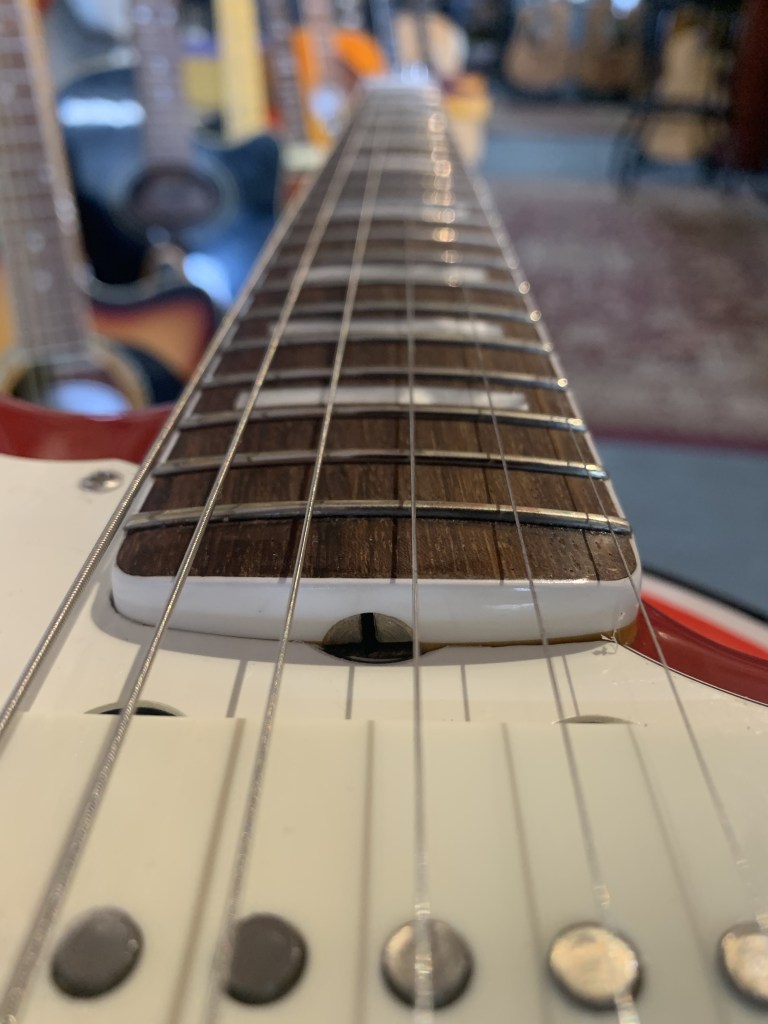
Vintage Radius
Vintage-style guitars often feature a more curved fingerboard radius, typically around 7.25 inches or even less. This design harks back to the early electric guitar era and offers a distinct feel and tonality. The pronounced curve suits players who emphasize chord playing, rhythm guitar, and genres like blues and jazz. The vintage radius promotes a warm, rounded tone, but it may require higher action to prevent fret buzz, particularly when playing with heavier strings or employing aggressive techniques. Some players also find that vintage radii can be challenging for wide string bends.
Are you looking for a guitar with the right fretboard radius? Check out our site!
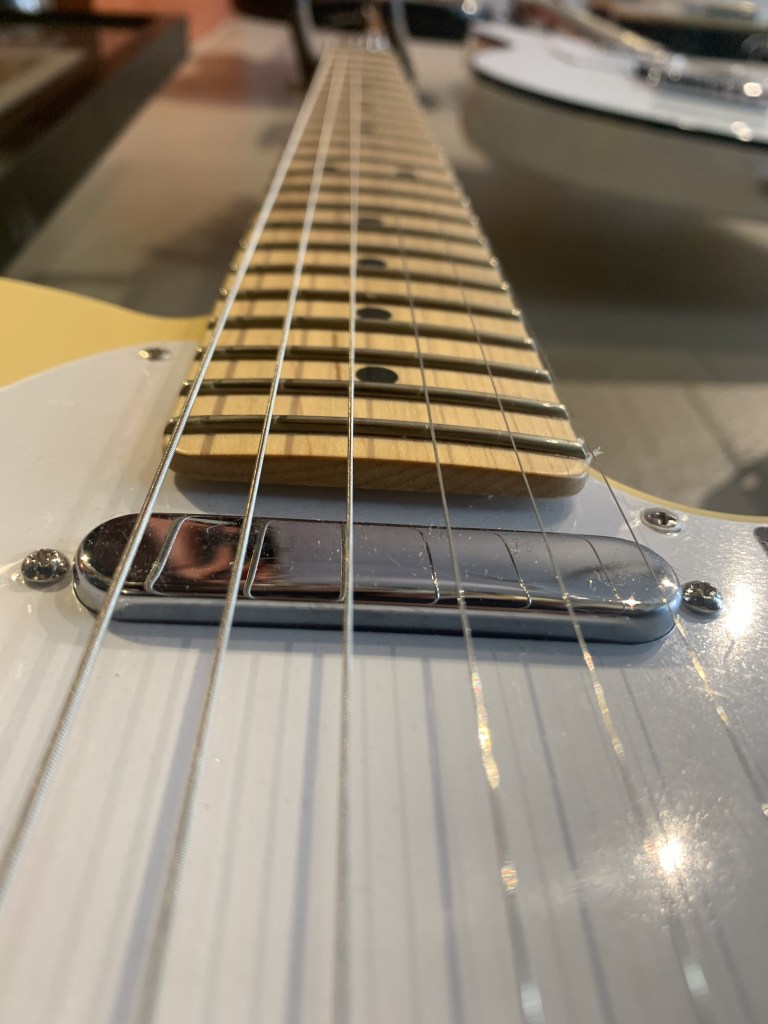
Medium Radius
A medium fingerboard radius, commonly around 9.5 to 12 inches, strikes a balance between the flat and curved designs. It offers a slightly rounder surface that allows for comfortable chord playing while still accommodating techniques like bending and vibrato. Guitars with a medium radius are versatile and can handle various playing styles, making them popular among blues, country, and classic rock players. This radius provides a good compromise for those who desire both fretting ease and the ability to perform expressive techniques.

Flat Radius
Guitars with a flat fingerboard radius, typically ranging from 12 to 16 inches, offer a more substantial and even surface. This design facilitates low action setups and supports techniques like string bending and fast playing, making it popular among shredders and players who favor modern styles such as rock, metal, and fusion. The flatter radius minimizes the chance of notes fretting out during aggressive playing, however, it’s worth noting that a flatter radius may not be as suitable for intricate chord voicings and string bending with a lighter touch.
Compound Radius
To combine the advantages of different fingerboard radii, some guitars employ a compound radius. This design features a gradual change in curvature along the fingerboard, usually transitioning from a flatter radius near the nut to a more curved radius closer to the higher frets. Compound radius fingerboards aim to offer the best of both worlds, facilitating comfortable chord playing in the lower register and smooth bending and fast playing in the upper register. This design is favored by many contemporary players who require versatility for a wide range of musical styles and techniques.
Choosing the right fingerboard radius is a vital consideration in optimizing your playing experience and achieving the desired tonal and technical outcomes. Whether you prefer a flatter radius for fast playing, a vintage radius for classic tonal qualities, a medium radius for versatility, or a compound radius for the best of both worlds, it’s essential to try different options and assess how they complement your playing style and comfort. Remember, the ideal fingerboard radius is subjective and varies based on personal preference, so explore and discover the one that enhances your musical journey.
Do you have a vintage guitar you’re interested in selling? Contact us here!
 IVG Blog