
By C.
Gibson is one of the most iconic names in the world of stringed instruments. And while the company is synonymous with quality acoustic and electric guitars, their mandolins also hold a revered place in the world of music. The company, founded by Orville Gibson in the late 19th century, pioneered many developments in the design and construction of mandolins that remain standard today. Gibson’s mandolin models are often split into two categories based on their body shape: the A-style and the F-style. Each of these models has various sub-models, with features that appeal to different types of players, from amateurs to professional musicians.
Do you have a vintage guitar or bass you’d like to sell? Contact us here

Orville Gibson, a skilled luthier, revolutionized mandolin construction when he founded the Gibson Mandolin-Guitar Manufacturing Company in 1902. Prior to his innovations, mandolins were typically bowl-backed instruments, similar to lutes. Orville’s breakthrough was to replace the traditional bowl shape with a carved arched top and back, similar to the construction of a violin. This design improved the volume, projection, and tonal clarity of the instrument. Gibson’s early mandolins also featured necks that extended further into the body, increasing playability for modern players.
The A-style mandolins are characterized by their teardrop-shaped bodies and lack of ornate scrollwork, making them simpler and more affordable than their F-style counterparts. These mandolins often have oval soundholes, though later models introduced f-holes, which are more akin to violin construction.
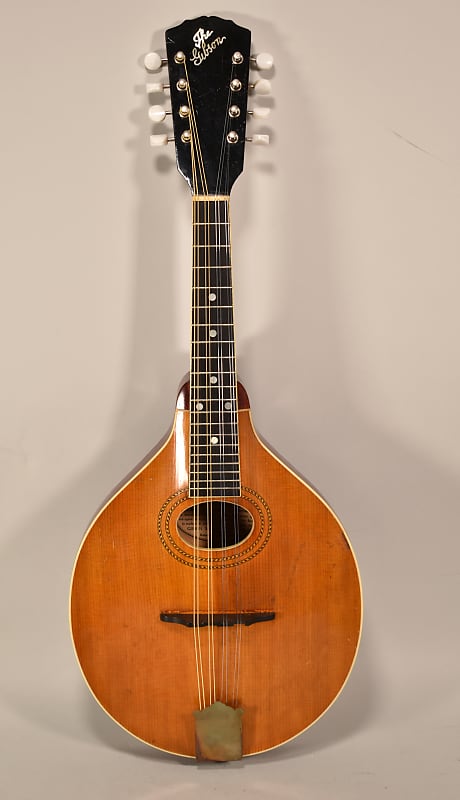
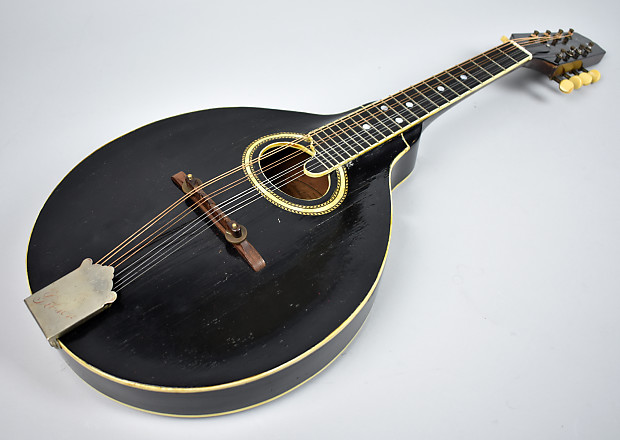
The A-style mandolin range was highly popular in the early 20th century. The A-Jr. was the most affordable, designed for beginners and students. Despite its lower price, it was still crafted with Gibson’s arched top and back design, providing good tone and projection. The A-1 through A-4 models were progressively more ornate, with the A-4 being the most luxurious in terms of decoration, featuring elaborate inlays, rosettes, and top-notch wood selection.
The A-5 model, introduced later, is significant because it incorporates f-holes instead of the earlier oval soundhole. F-holes became preferred by many bluegrass and jazz musicians because they emphasize the mandolin’s treble response and provide a punchier sound. The A-5 was famously associated with musician Jethro Burns, and his influence helped this model gain popularity during the mid-20th century.
Did you know we also buy collections? If you need to sell multiple pieces at once quickly and easily, send us an email or give us a call for more info
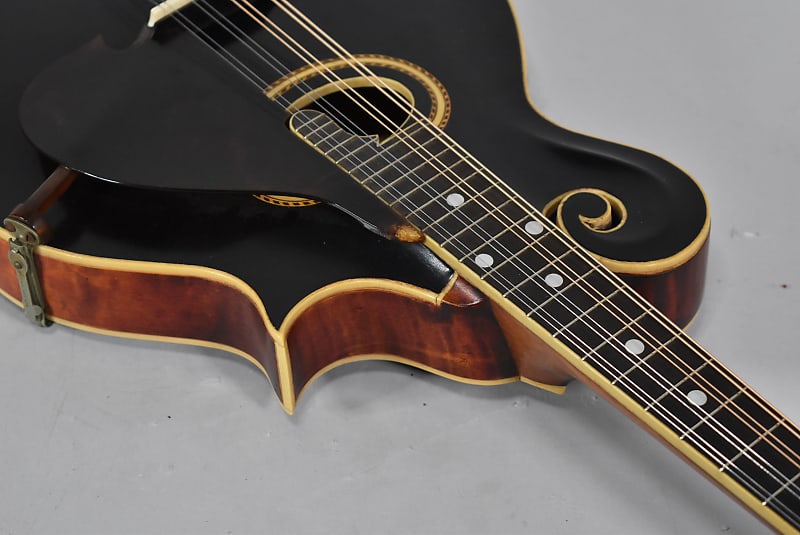
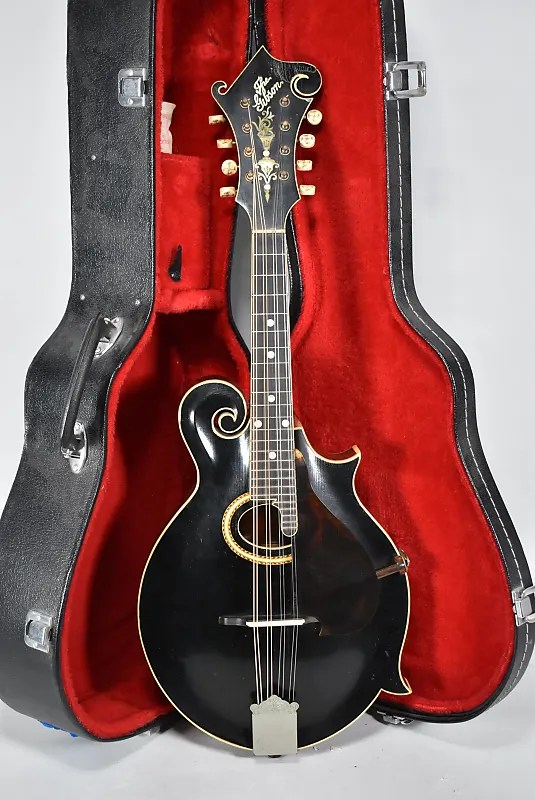
The F-style mandolin is arguably the most iconic Gibson design, known for its scroll and decorative points. These features don’t necessarily contribute to the instrument’s sound but are considered aesthetically desirable by many players, especially in the bluegrass genre, where the F-style is often regarded as the gold standard.
The F-2 and F-4 models were among the earliest F-style mandolins, introduced in the early 1900s. They have oval soundholes, which produce a warm, rich tone that is particularly suited to classical and folk music. The F-4 is considered one of the most beautiful mandolins ever made, with elaborate binding, inlays, and rosettes. These models have a rich, mellow tone with a fuller low end compared to the later F-style models.

The F-5 is perhaps the most famous mandolin model in history. Developed under the guidance of legendary luthier Lloyd Loar in the 1920s, the F-5 revolutionized mandolin design. Loar’s F-5 introduced the f-holes, which enhanced projection and made the instrument ideal for bluegrass and jazz. The F-5’s body design was also refined for better tonal balance, with a longer neck joining the body at the 15th fret (as opposed to the 12th fret on earlier models). This construction improved playability and increased access to the higher frets.
Loar-era F-5s (1922-1924) are considered the Stradivari of mandolins. They are highly prized by collectors and players alike, with prices for original Loar-signed F-5s reaching well into six figures. Bill Monroe, the father of bluegrass, played an F-5, cementing its association with the genre.
While the models mentioned above are now considered classics, newer models such as the F-9 prove that Gibson is still committed to providing top tier mandolins. Introduced in the early 2000s, the F-9 is a simpler, more affordable version of the F-5. It retains the iconic F-style body shape but without the ornate binding and inlays found on more expensive models. Despite its stripped-down appearance, the F-9 still delivers the powerful tone that players expect from a Gibson mandolin.
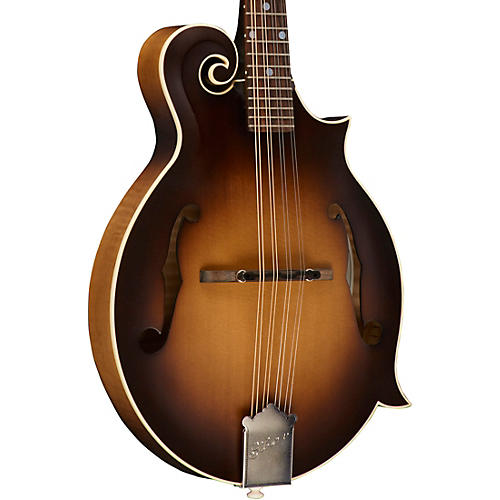
Today, Gibson continues to produce high-quality mandolins, though they have shifted their focus slightly towards guitars and basses. The company’s mandolins are still highly sought after by both collectors and professional musicians. Custom shop models and reissues of the classic F-5 and A-5 are available, often featuring hand-carved tops, premium woods, and intricate inlay work.
Gibson’s mandolin models have had a profound impact on the development of the instrument and the genres that embrace it, particularly bluegrass. Whether a simple A-style model or an ornate F-style masterpiece, Gibson mandolins continue to be regarded as some of the finest instruments in the world, known for their craftsmanship, tonal richness, and historical significance.
With 4 stores across Southern California, we’re always buying! Not sure what your instrument is worth? Bring it by the shop or schedule an appraisal online
 IVG Blog