

By C.
7-string guitars, love ’em or hate ’em, bring something unique to the table that reaches beyond the traditional 6-string configuration. And while we generally associate the sound of a 7-string with harder, more aggressive sub-genres of rock and metal music, its history can be traced back all the way to the 1960’s. One artist in particular may deserve all the credit for the innovation of 7-strings with his signature model from Gretsch, guitarist George Van Eps.
Do you have a vintage guitar or bass you’d like to sell? Contact us here
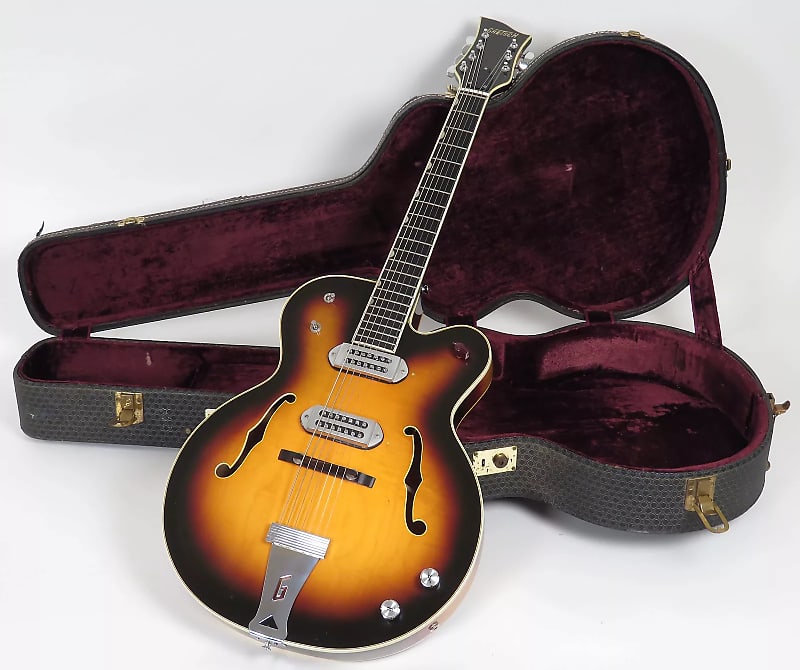
The Gretsch George Van Eps guitar is a unique and historically significant instrument that reflects both the artistry of its namesake, George Van Eps, and the craftsmanship of Gretsch, a renowned guitar manufacturer. This guitar is distinct in the world of jazz and guitar playing for several reasons, most notably its seven-string configuration, which was a pioneering feature during its time.

George was an American jazz guitarist known for his intricate playing style and innovative approach to the guitar. Born in 1913, Van Eps began his career as a professional musician in the 1930s and became renowned for his skill and musicality. What set Van Eps apart from many of his contemporaries was his desire to expand the harmonic and melodic possibilities of the guitar. To achieve this, he added a seventh string to his instrument, which allowed him to explore deeper bass notes and more complex chord voicings. This innovation made him one of the pioneers of the seven-string guitar, a feature that would later become a hallmark of his signature model with Gretsch.
The collaboration between George Van Eps and Gretsch began in the late 1960s when the company sought to create a signature model that would capture Van Eps’s unique playing style and tonal requirements. Gretsch, a company with a rich history of producing high-quality guitars since the 19th century, was well-suited to undertake this task. The result was the Gretsch George Van Eps seven-string guitar, which was released in 1968.
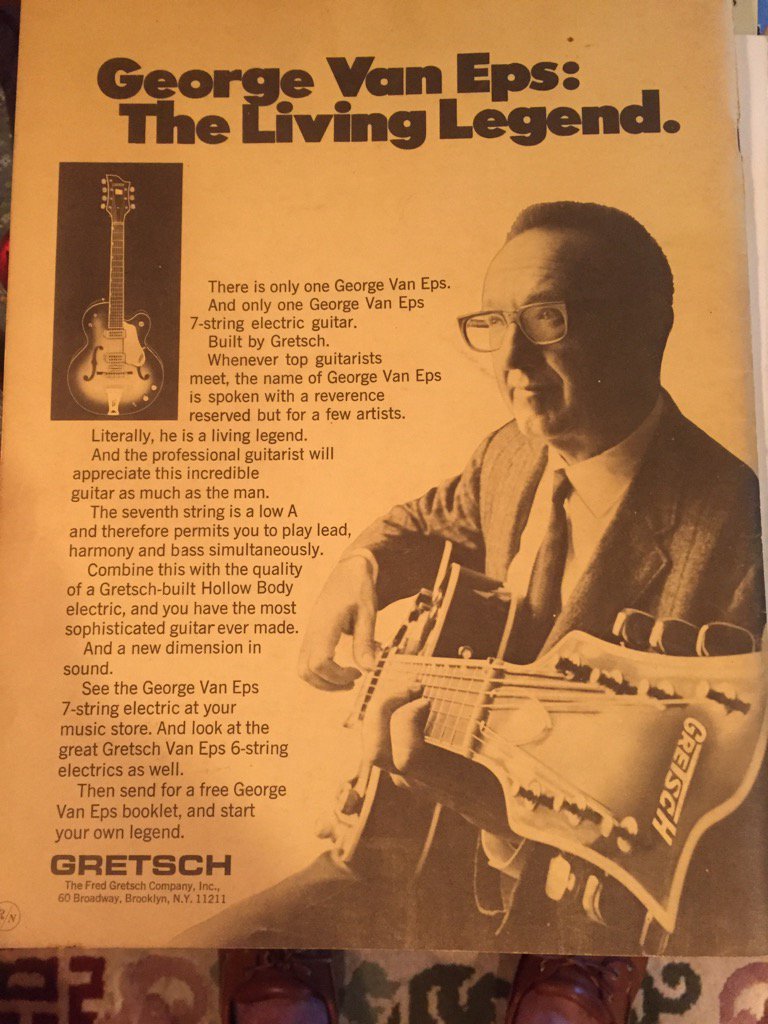
This guitar was distinct in several ways. Firstly, the addition of the seventh string allowed for a lower range, expanding the harmonic possibilities for jazz guitarists. This extra string enabled players to incorporate bass lines and counterpoint more easily into their playing, essentially allowing one musician to cover both bass and melodic duties simultaneously. For Van Eps, this was a natural evolution of his desire to make the guitar more piano-like in its capabilities, blending harmony, melody, and rhythm into a cohesive whole.
The Gretsch George Van Eps guitar was built to accommodate the demands of professional jazz musicians who required a high-quality instrument capable of delivering a wide range of tones. It featured a hollow body design typical of many jazz guitars, which provided a warm, resonant sound ideal for the genre. The guitar was constructed with a maple top, back and sides, chosen for its tonal characteristics and durability.
Did you know we also buy collections? If you need to sell multiple pieces at once quickly and easily, send us an email or give us a call for more info
One of the most striking features of the Gretsch George Van Eps model was its scale length. The guitar had a slightly longer scale than most standard Gretsch guitars at 25.5″, which helped to accommodate the additional string and maintain proper tension across all strings. This design choice also contributed to a clearer, more defined tone, particularly in the lower registers, which was crucial for Van Eps’s style of playing.
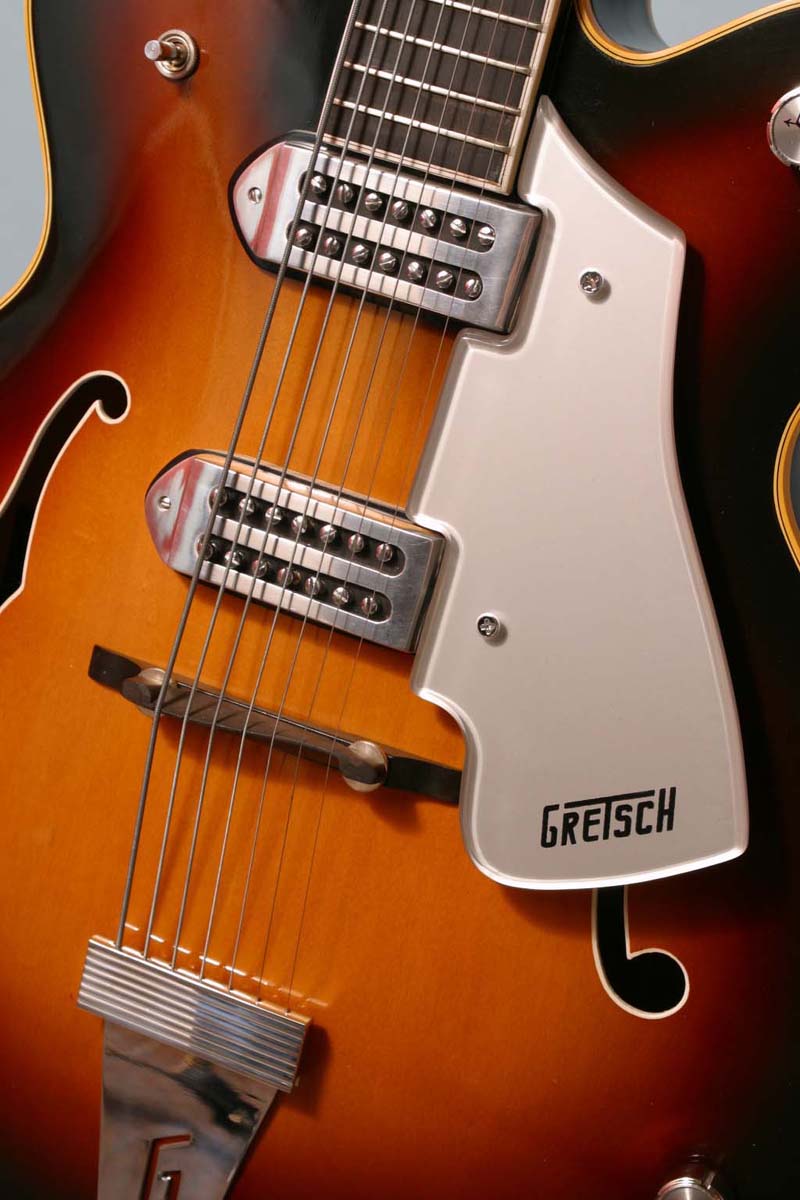
The guitar also featured a unique pickup configuration designed to capture the full range of tones from the seven strings. Gretsch equipped the instrument with humbucking pickups, which were favored by jazz musicians for their warm, full sound and resistance to electronic interference. These pickups allowed the guitar to produce a balanced tone across all strings, making it suitable for a wide range of musical styles beyond jazz, including blues, rock, and even classical.
The Gretsch George Van Eps guitar has had a lasting impact on the world of jazz guitar and beyond. It helped to popularize the use of the seven-string guitar, which was a rarity in the 60’s and 70’s but has since become more common among guitarists seeking to expand their musical possibilities. While the seven-string configuration is now widely associated with genres like metal and progressive rock, its origins in jazz and its development through instruments like the Gretsch George Van Eps model cannot be overlooked.
The collaboration between Gretsch and Van Eps also highlighted the importance of innovation and customization in guitar design. By creating a guitar that met the specific needs of a pioneering musician, Gretsch demonstrated its commitment to craftsmanship and its willingness to push the boundaries of what a guitar could be. This spirit of innovation has continued to be a hallmark of the company’s approach to guitar making.
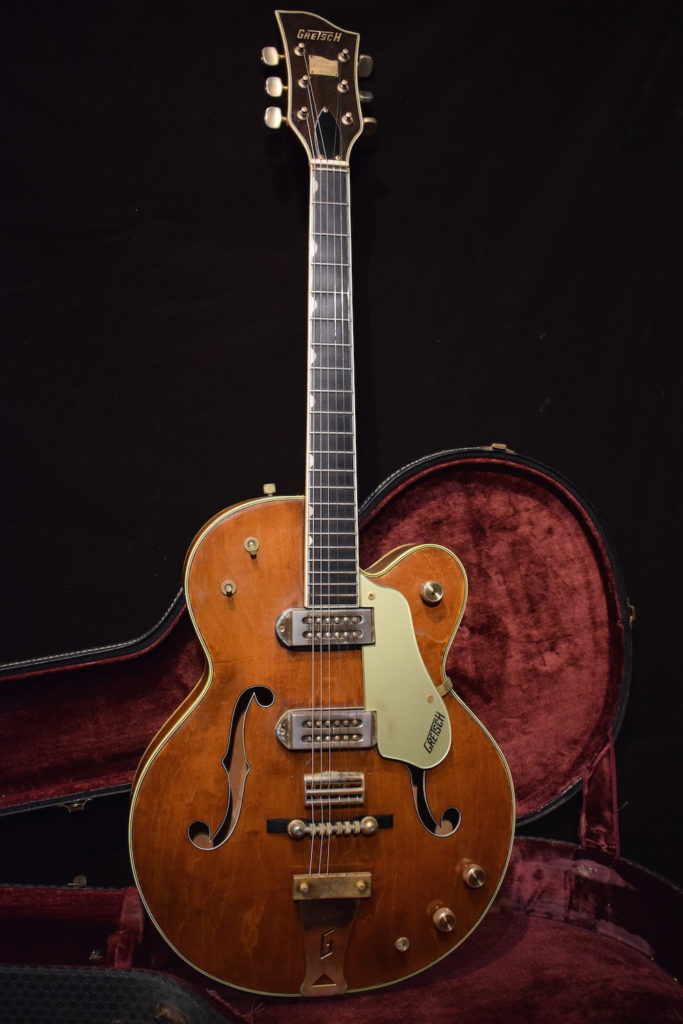
The Gretsch George Van Eps model is a guitar that honors the artistry of both its namesake and its maker. With its unique seven-string configuration and carefully crafted design, it stands as a significant instrument in the history of jazz guitar, influencing countless musicians and contributing to the evolution of guitar playing across genres.
With 4 stores across Southern California, we’re always buying! Not sure what your instrument is worth? Bring it by the shop or schedule an appraisal online
 IVG Blog