
By C.
These days its not uncommon to see both guitars and basses featuring one or more strings, and with many manufacturers catering to the needs of players of a wide variety of genres, its become fairly normal to see instruments built way beyond their original designs. But this wasn’t the case in the 1960’s, as the world had known the new electric bass to be an exclusively 4-string instrument. That is, until Fender introduced the electric Bass V.
Do you have a vintage guitar or bass you’d like to sell? Contact us here
The Fender Bass V is a unique instrument in the history of electric bass guitars, notable for its design, features, and the specific niche it attempted to fill in the 1960s. As the first five-string bass guitar produced by Fender, it represented a bold step forward in the development of electric basses, even though its commercial success was limited.

Introduced in 1965, the Fender Bass V was designed to provide bassists with a greater range of notes, particularly in the higher registers. Unlike most modern five-string basses, which add a lower B string, the Fender Bass V added a high C string to the standard four-string setup. This innovation aimed to offer bass players more versatility, especially in genres where melodic playing and higher register work were becoming more prominent.
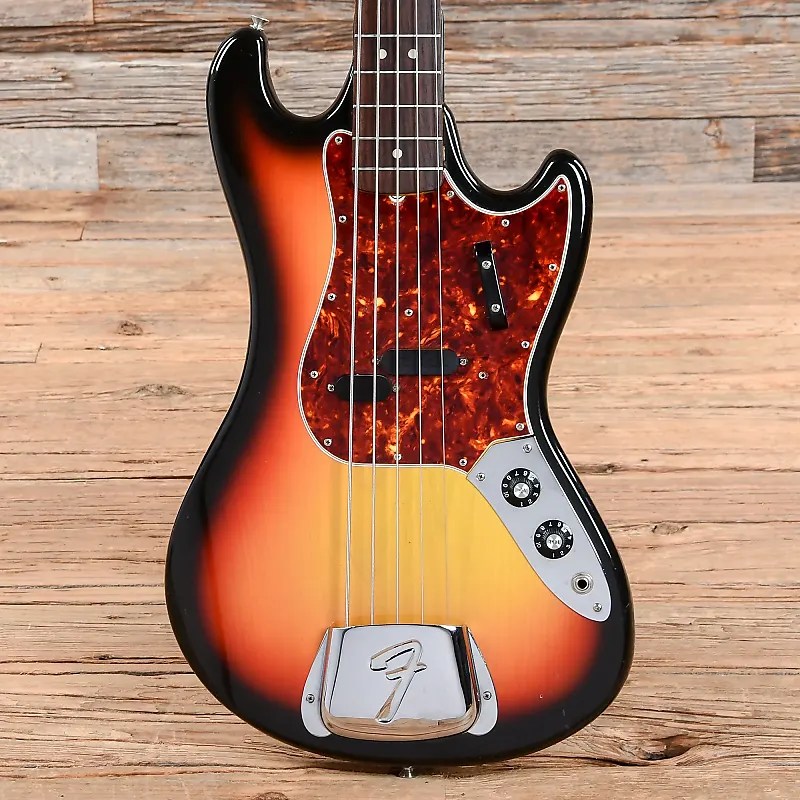
The Fender Bass V featured a 34-inch scale length, typical of Fender basses, but with a 15-fret neck, which was shorter than the traditional 20- or 21-fret necks. This shorter neck was intended to make the instrument more manageable and to keep the overall size reasonable despite the additional string. The body design was somewhat similar to the Fender Precision Bass, but with a more elongated upper horn and a modified headstock shape to accommodate the additional tuning machines.

The sound of the Fender Bass V was influenced heavily by its pickup configuration and construction. It used a split-coil pickup positioned in the middle of the body, similar to the Fender Precision Bass, which gave it a bright, punchy tone. This tone was further shaped by the unique string configuration, offering a wider range of notes and enabling bassists to explore higher melodic lines more effectively.
In terms of playability, the short 15-fret neck was a double-edged sword. While it made the bass easier to handle, it also limited the range of the instrument in the lower registers. Many bassists found the high C string useful for soloing and melodic work, but the truncated neck meant that some of the low-end power and sustain typically associated with Fender basses were sacrificed.

Did you know we also buy collections? If you need to sell multiple pieces at once quickly and easily, send us an email or give us a call for more info
The Fender Bass V was not a commercial success compared to its predecessors like the Precision and Jazz basses. Several factors contributed to its lukewarm reception. Firstly, the concept of a five-string bass was far ahead of its time. In the mid-1960s, most bassists were still adapting to the relatively new electric bass, and the demand for extended range instruments was minimal. Furthermore, the high C string was not universally appreciated, as many bass players preferred to have access to lower notes instead.
Additionally, the shorter neck and the somewhat awkward balance of the instrument did not appeal to many players. The bass’s elongated body design, intended to accommodate the scale length and bridge position, made it somewhat cumbersome. These design choices, coupled with the lack of a compelling market demand, led to the Fender Bass V being discontinued in 1971, with only about 200 to 300 units produced.
Despite its commercial failure, the Fender Bass V holds an important place in bass guitar history. It was a pioneering instrument that foreshadowed the eventual popularity of five-string basses, albeit with a different configuration. Modern five-string basses typically extend the lower range with a low B string, responding to the evolving needs of bassists across various genres, particularly in jazz, rock, and metal.

The Bass V’s influence on modern bass design can be seen in the gradual acceptance and eventual popularity of five-string basses. As music evolved and the role of the bass guitar became more prominent, the need for extended range instruments grew. While the Fender Bass V’s high C string concept did not necessarily catch on, it opened the door for further experimentation and innovation in bass design.
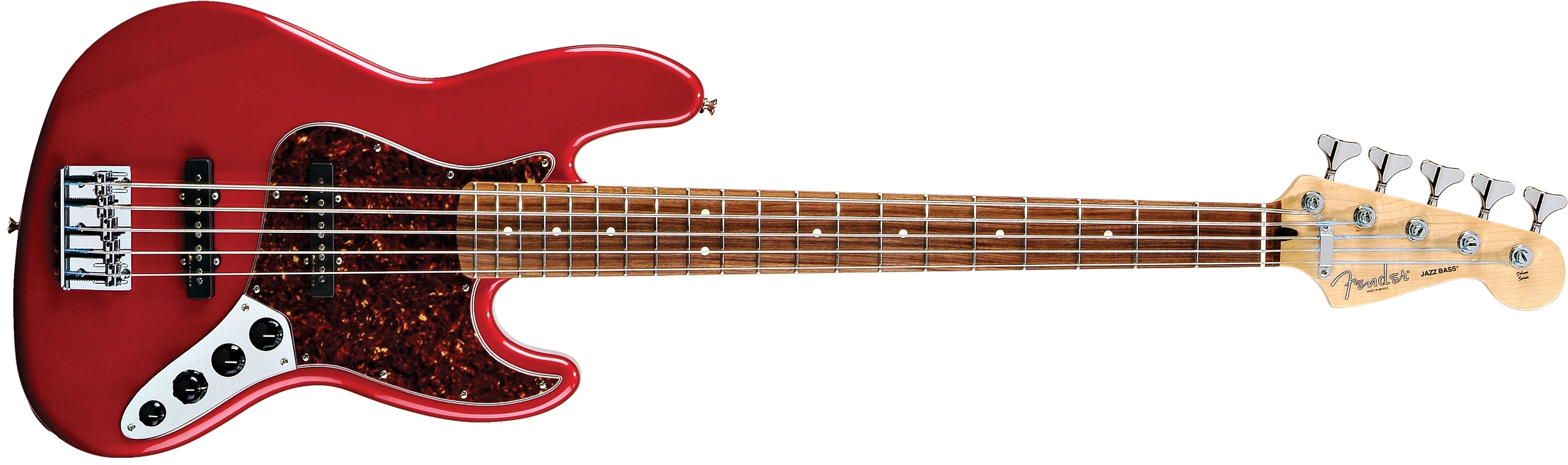
In the decades following the Bass V’s discontinuation, several manufacturers, including Fender, began producing five-string basses with a low B string, which have become standard in many musical styles. These instruments offer the extended range that modern bassists demand, proving that the core idea behind the Fender Bass V was sound, even if its execution was not immediately embraced.
The Fender Bass V remains a fascinating chapter in the history of electric bass guitars. Its innovative approach and unique design set it apart, even if it did not achieve the same commercial success as Fender’s other electric bass models. Today, it is a sought-after collector’s item and a symbol of Fender’s willingness to push the boundaries of instrument design. The lessons learned from the Fender Bass V’s development have undoubtedly influenced the evolution of bass guitars, contributing to the diverse and versatile instruments available to bassists today.
With 4 stores across Southern California, we’re always buying! Not sure what your instrument is worth? Bring it by the shop or schedule an appraisal online
 IVG Blog