
By C.
Vintage Gibson guitars of the 1950’s and 60’s are renowned for their craftsmanship, tonal qualities, and historical significance to the musical world. Among the various features that contribute to their distinctiveness are their vibrato tailpieces, which have played a crucial role in shaping the sound and playability of these iconic instruments. Over the decades, Gibson has experimented with several types of vibratos, each bringing their own unique characteristics and mechanical innovations. In this article we’ll be exploring a bit into some of the most notable types used on vintage Gibson guitars.
Do you have a vintage guitar or bass you’d like to sell? Contact us here
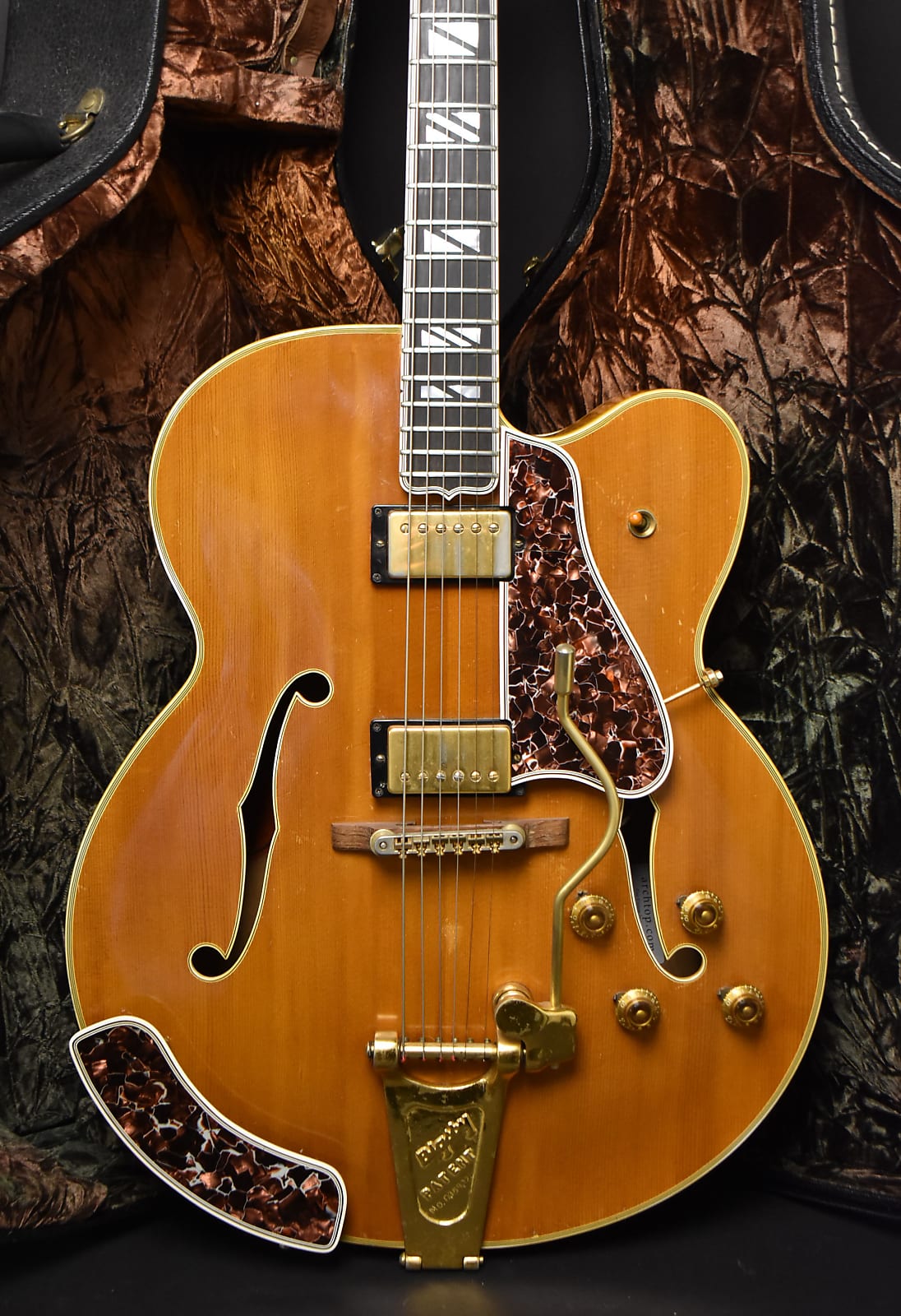
First off are Bigsby vibrato tailpieces, one of the most iconic vibrato systems associated with vintage Gibson guitars. Invented by Paul Bigsby and debuted in 1951, this tailpiece became a standard on many Gibson models, especially during the 1950s and 1960s. The Bigsby operates by moving a bar attached to a spring, which alters the tension of the strings and produces a vibrato effect. It is known for its smooth, subtle pitch variations and its ability to maintain tuning stability relatively well. The Bigsby B7 and B6 models were particularly popular on Gibson semi-hollow and hollow body guitars, such as the ES-335 and ES-175. Bigsby B5’s (also known as the “horseshoe Bigsby”) were also used on some Gibson electrics, though commonly a custom-order feature.
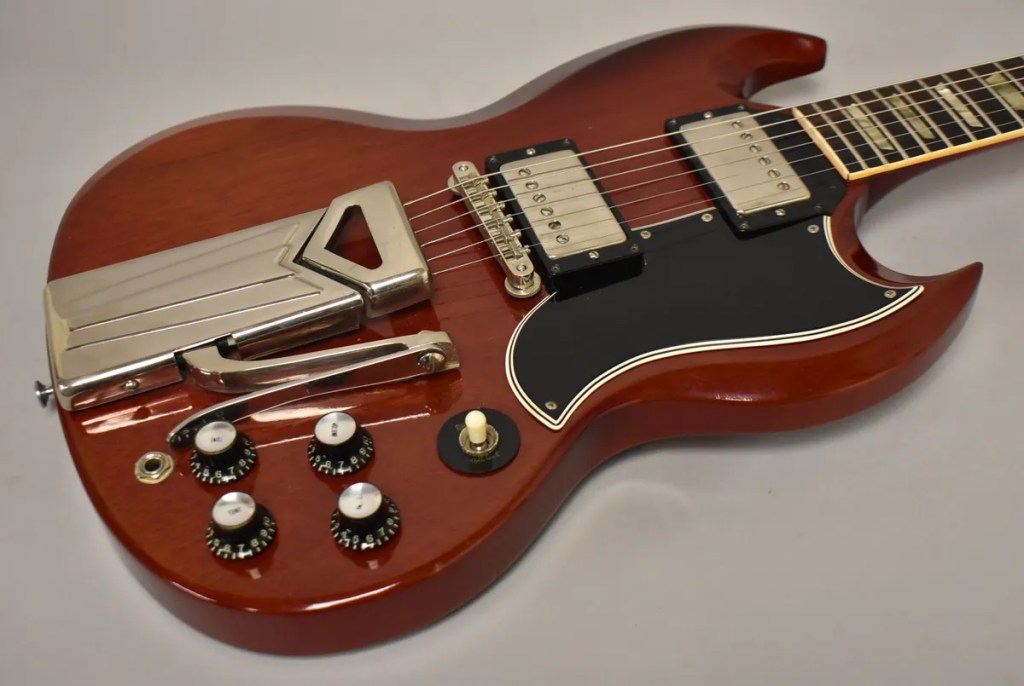
Up next is the Sideways Vibrola. These are one of the more unusual vibrato systems used by Gibson. Introduced in 1961, it featured a unique mechanism where the vibrato arm moves sideways rather than up and down. Also a spring-loaded device, this design was meant to offer a smoother vibrato effect but was often criticized for being difficult to use and for not holding tune well. It appeared on early 1960s models of the SG (then known as the new “Les Paul”, such as the Standard and Custom. But due to its unpopularity and mechanical issues, it was phased out relatively quickly, making guitars equipped with this vibrato system rare and collectible today. While they might not be the most reliable, they sure are pretty!
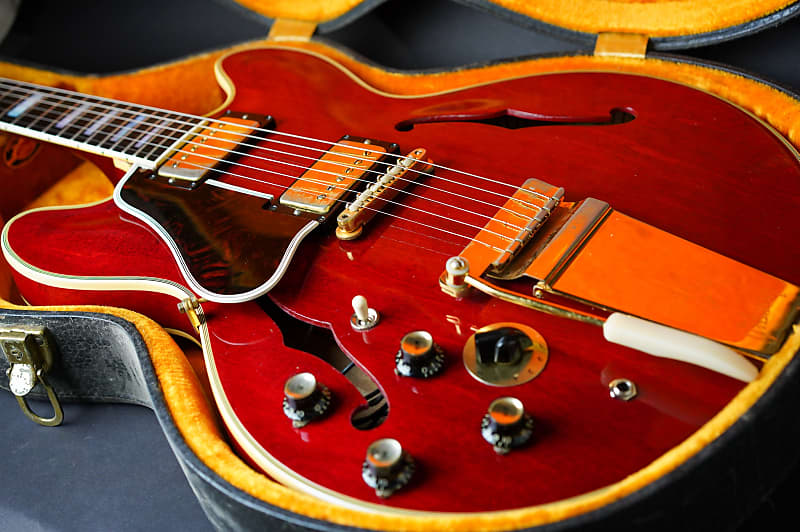
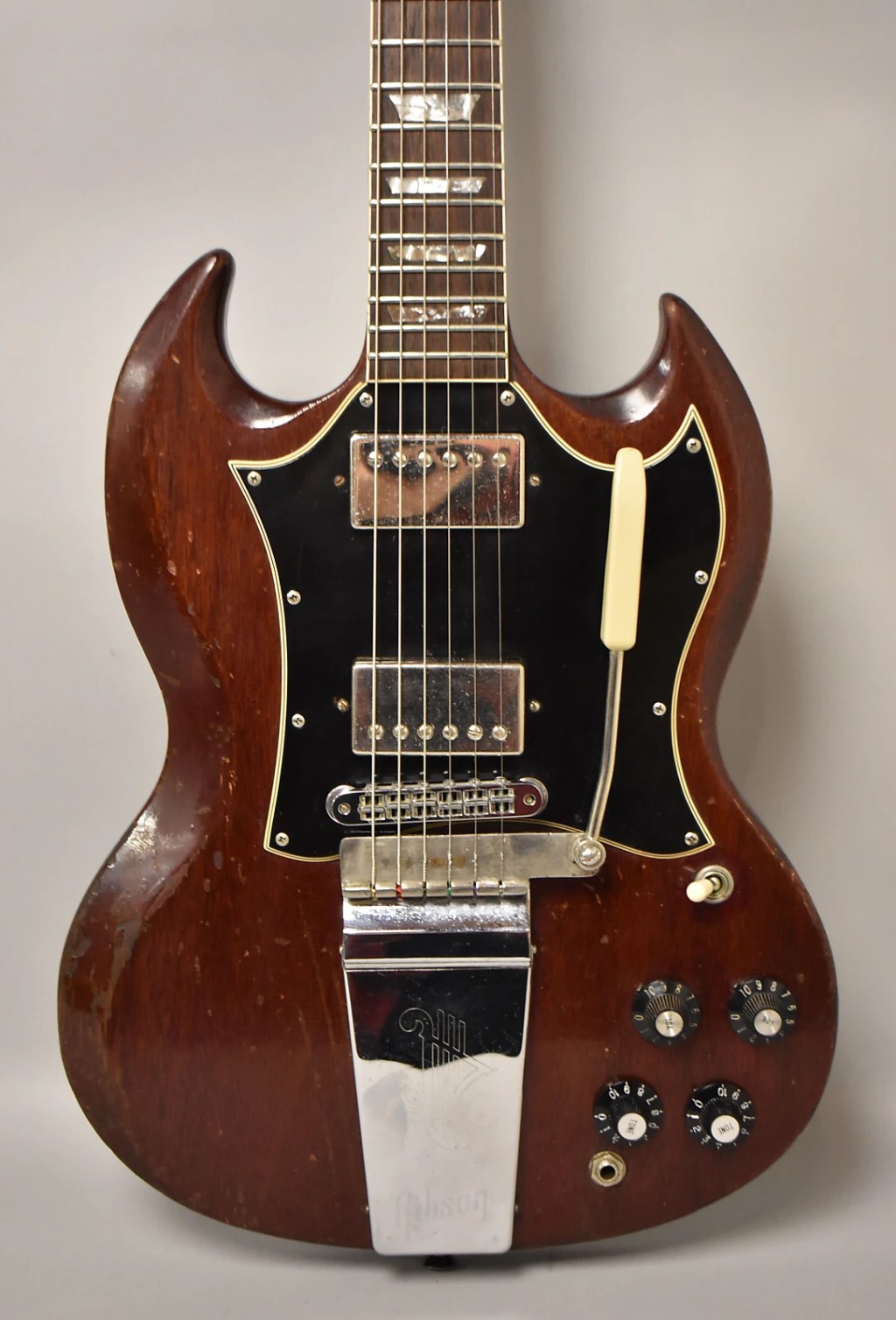
Moving on we have the Maestro Vibrolas. Introduced in the early 60’s, the Maestro Vibrola was another significant vibrato system used by Gibson. Unlike the Bigsby, the Maestro Vibrola featured a longer tailpiece and a more elaborate mechanism involving a leaf spring attached to the arm. It was installed on models like the SG Standard and the Flying V. The Maestro Vibrola is appreciated for its ability to create vibrato effects aswell as for its distinct aesthetic appeal, which includes engraved lyre motifs on original models. However, it is also known for being somewhat temperamental, sometimes causing tuning instability and decreased sustain.
Did you know we also buy collections? If you need to sell multiple pieces at once quickly and easily, send us an email or give us a call for more info
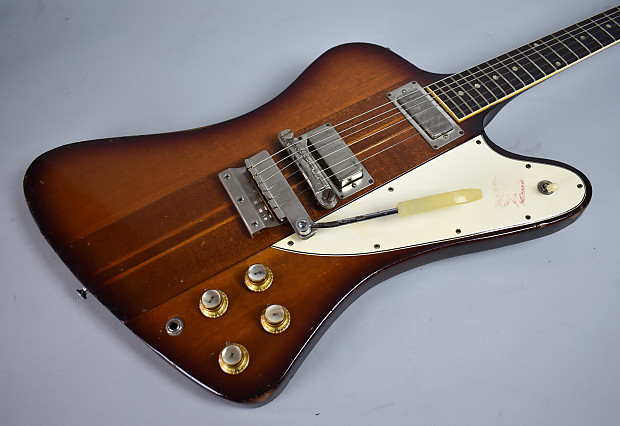
Vibrola with Short Lyre: The Vibrola with Short Lyre, also introduced in the 60s, is a simplified version of the Maestro Vibrola. It features a shorter tailpiece and a streamlined mechanism, which aimed to address some of the issues of the earlier models. This version was used on a range of Gibson guitars, including the SG and Firebird models. The Short Lyre Vibrola provided a balance between usability and aesthetic appeal, maintaining the ornate look of the original Maestro while offering improved performance. While most examples resemble the Firebird seen above, in 1962 Gibson offered a high-end embelished version on SG Standards, known as the “ebony block”. These are very rare, and have a unique look not seen on other Short Maestros.

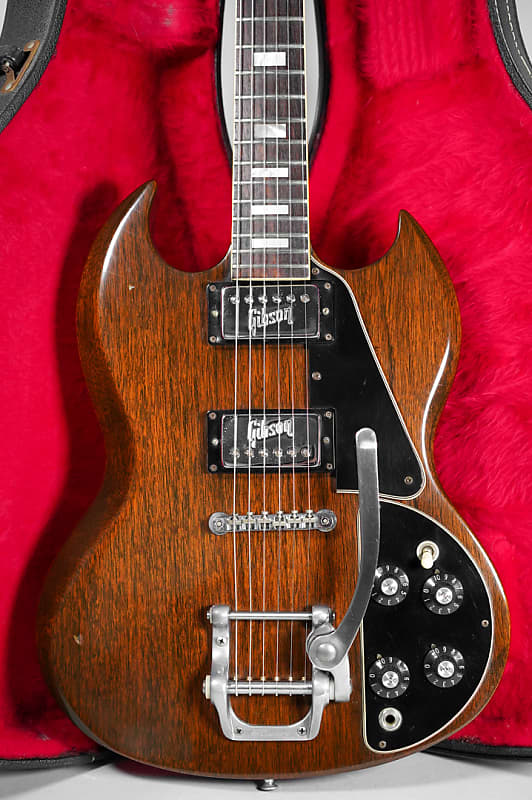
Gibson continued to implement vibrato tailpieces throughout the 1970’s, even going as far as “designing” their own (as seen below on this 1972 SG Deluxe with a Gibson horseshoe style tailpiece). But nothing quite beats the charm and aesthetic appeal of the original “Golden Era” tailpieces that players and admirers worldwide have come to know and love.
The variety of vibrato tailpieces used on vintage Gibson guitars reflects the company’s forward-thinking spirit and responsiveness to the evolving needs of guitarists. Each vibrato system, from the smooth-operating Bigsby to the distinctive art deco-esque Sideways Vibrola, has contributed to the unique sound and playability of Gibson guitars. Collectors and musicians alike cherish these vintage instruments not only for their historical value but also for the diverse tonal possibilities that these vibrato tailpieces provide. So if you need that extra wiggle on your Gibson, we hope this has armed you with some helpful insight for your next purchase.
With 4 stores across Southern California, we’re always buying! Not sure what your instrument is worth? Bring it by the shop or schedule an appraisal online
 IVG Blog