
By C.
The Telecaster has undergone various modifications and improvements over the years. One significant area of change lies in its bridge design, with distinctions between vintage-style and modern-style bridges. Understanding the differences between these two types of bridges is crucial for guitar enthusiasts and players seeking to get the most out of their Teles (and Esquires too! We didn’t forget).
Do you have a vintage guitar or bass you’d like to sell? Contact us here

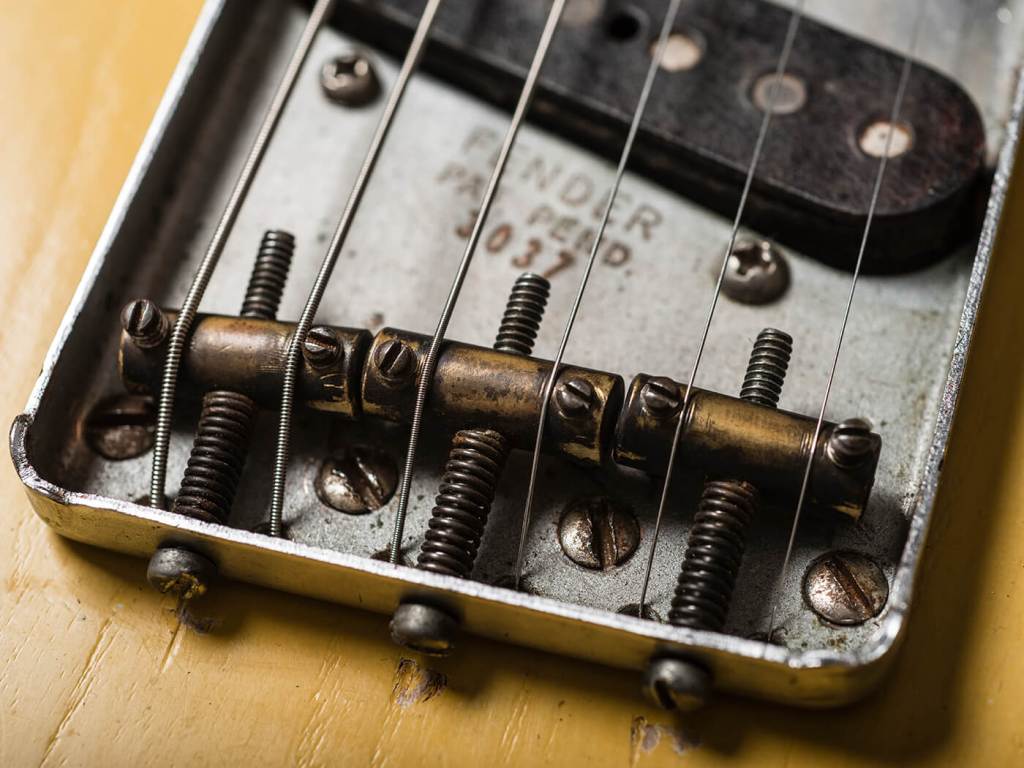
The vintage-style Telecaster bridge harkens back to the original design introduced in the early 1950s. It features three brass saddles, each of which supports two strings. These saddles are typically barrel-shaped and have smooth, rounded tops. The bridge plate itself is often made of steel, contributing to the characteristic twangy tone associated with vintage Telecasters.
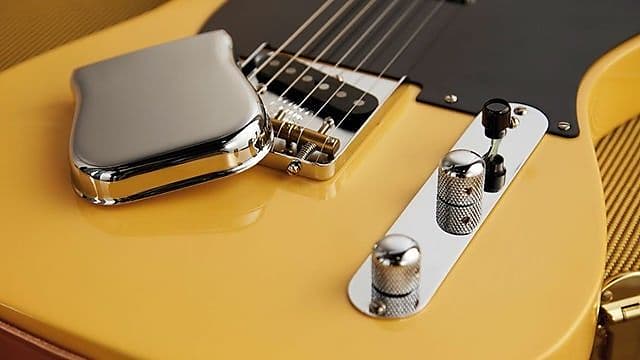
One of the most recognizable features of the vintage-style bridge is its traditional “ashtray” cover, a metal plate that surrounds the bridge pickup. This cover not only served as a stylistic element but also provided some protection for the pickup. However, it can affect the way players palm mute and rest their hand on the bridge, which may be a consideration for some players. After all, it earned its namesake due to the fact that the majority of players removed it, and often repurposed the piece as an ashtray. Those were the days!

On the other hand, modern-style Telecaster bridges deviate from the vintage design in several ways. One significant difference is the use of individual saddles for each string instead of the shared saddles found in vintage bridges. Similar to that of a Stratocaster, these individual saddles allow for more precise intonation adjustment and string height adjustment for each string independently, enhancing the guitar’s playability and tuning stability. The original 6-saddle design was a product of the mid 70’s CBS era, and also featured a slot in each saddle to keep the strings in place.
Did you know we also buy collections? If you need to sell multiple pieces at once quickly and easily, send us an email or give us a call for more info.
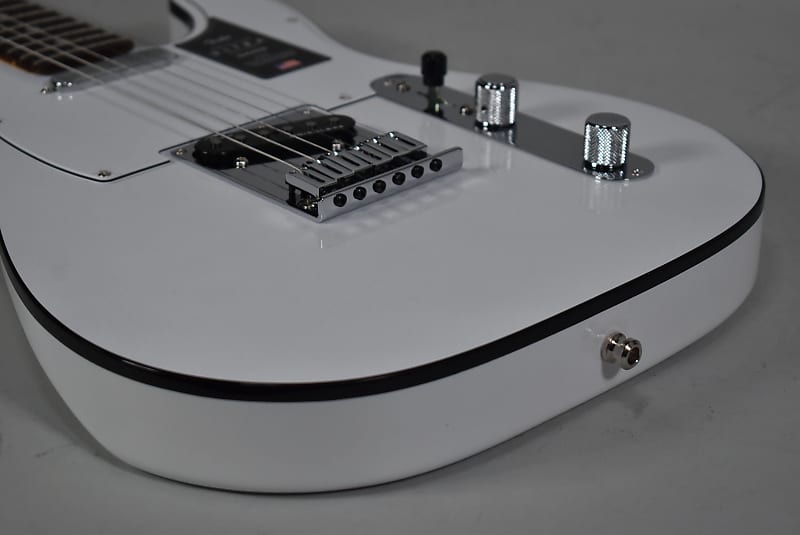
Modern bridges often feature materials like stainless steel or chrome-plated steel for improved durability and resistance to corrosion. Additionally, modern bridges may incorporate other enhancements such as a shorter, lower profile edge where a player might rest their hand, or compensated saddles for a 3-saddle design, which help maintain stable tuning, particularly during aggressive playing.
In terms of tone, modern-style Telecaster bridges may offer a slightly different sound compared to their vintage counterparts. The use of individual saddles and different materials can influence factors such as sustain, brightness, and resonance. While both vintage and modern bridges contribute to the classic Telecaster sound, some players may find that modern bridges provide a slightly clearer or brighter tone, especially under high-gain settings. But for those preferring the vintage Tele twang, a traditional 3-saddle bridge with brass saddles is often the preferred choice.
Ultimately, the choice between a vintage-style and modern-style Telecaster bridge comes down to personal preference and playing style. Players who prioritize authenticity and vintage aesthetics may prefer the traditional look and feel of a vintage-style bridge. And for those seeking enhanced tuning stability, and modern conveniences, opting for a modern-style bridge may be the way to go.
With 4 stores across Southern California, we’re always buying! Not sure what your instrument is worth? Bring it by the shop or schedule an appraisal online
While vintage-style and modern-style Telecaster bridges share the same fundamental purpose of supporting the strings and transferring vibrations to the guitar body, they differ in design, materials, features, and their impact on tone and playability. Whether you prefer the timeless charm of a vintage-style bridge or the modern functionality of its counterpart, both options contribute to the legacy of the Telecaster as a beloved and essential instrument in the world of electric guitars.
 IVG Blog