
By C.
In the last few decades, both recording and live sound practices have relied on close-miking amps to achieve the desired sound, allowing guitar players to leave their 100-watt stacks at home in favor of something smaller and lower output. This is common practice now, and for many it has made life a lot easier with far fewer trips to the chiropractor. We’re also seeing a surge in popularity for certain small amps that still deliver the classic sounds of their bigger and louder siblings. This is a look at one of those amps, the Fender Princeton.
Do you have a vintage guitar you’d like to sell? Contact us here
The Fender Princeton is a mainstay of the original Fender amp line and has been around in some form since the 1940s. Revered for its compact size, portability, and unmistakable tone, the Princeton has become a favorite among musicians across genres, from country to rock to blues.
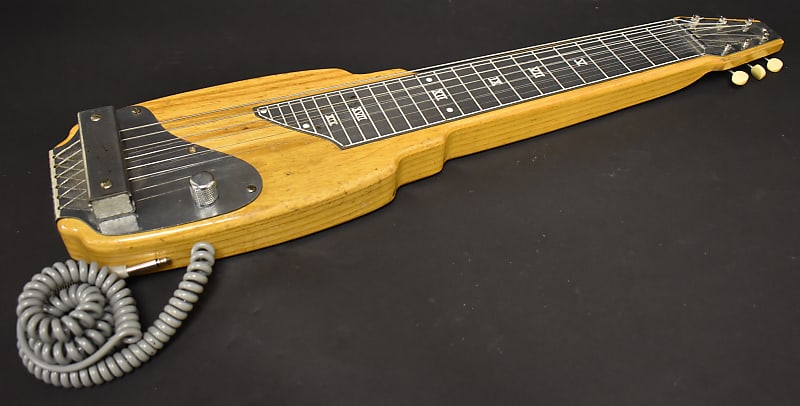
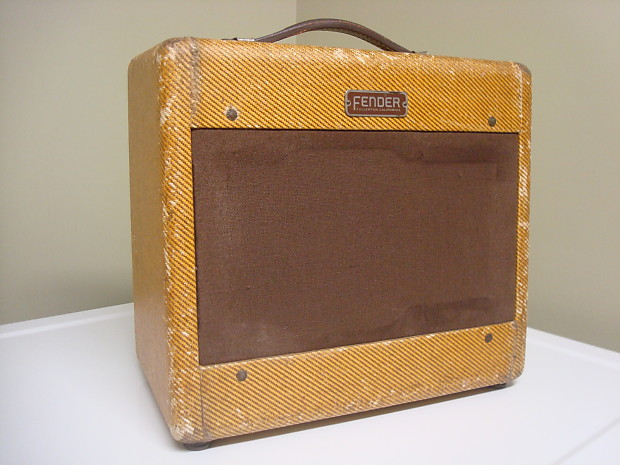
The history of the Fender Princeton dates back to 1947 when Leo Fender, the founder of Fender Musical Instruments Corporation, introduced the world to a new era of amplification. The Princeton was part of Fender’s initial lineup of amplifiers and was designed with a matching lap steel guitar (also known as the Princeton) with simplicity, functionality, and great tone in mind. Its compact size made it a practical choice for musicians who needed a reliable amplifier that could be easily transported to small gigs or recording sessions.
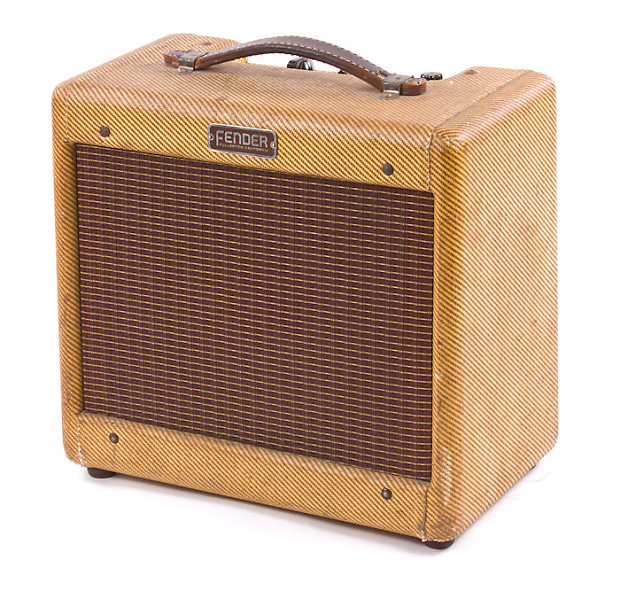
One of the key features that set the Fender Princeton apart was its use of the then-revolutionary 6SC7 preamp tube, which contributed to its warm and clean ‘Tweed’ tone. This tube, combined with a single 10-inch speaker, provided a sweet and responsive sound that quickly gained popularity. Over the years, Fender introduced various versions and updates to the Princeton, each with its unique characteristics and improvements.
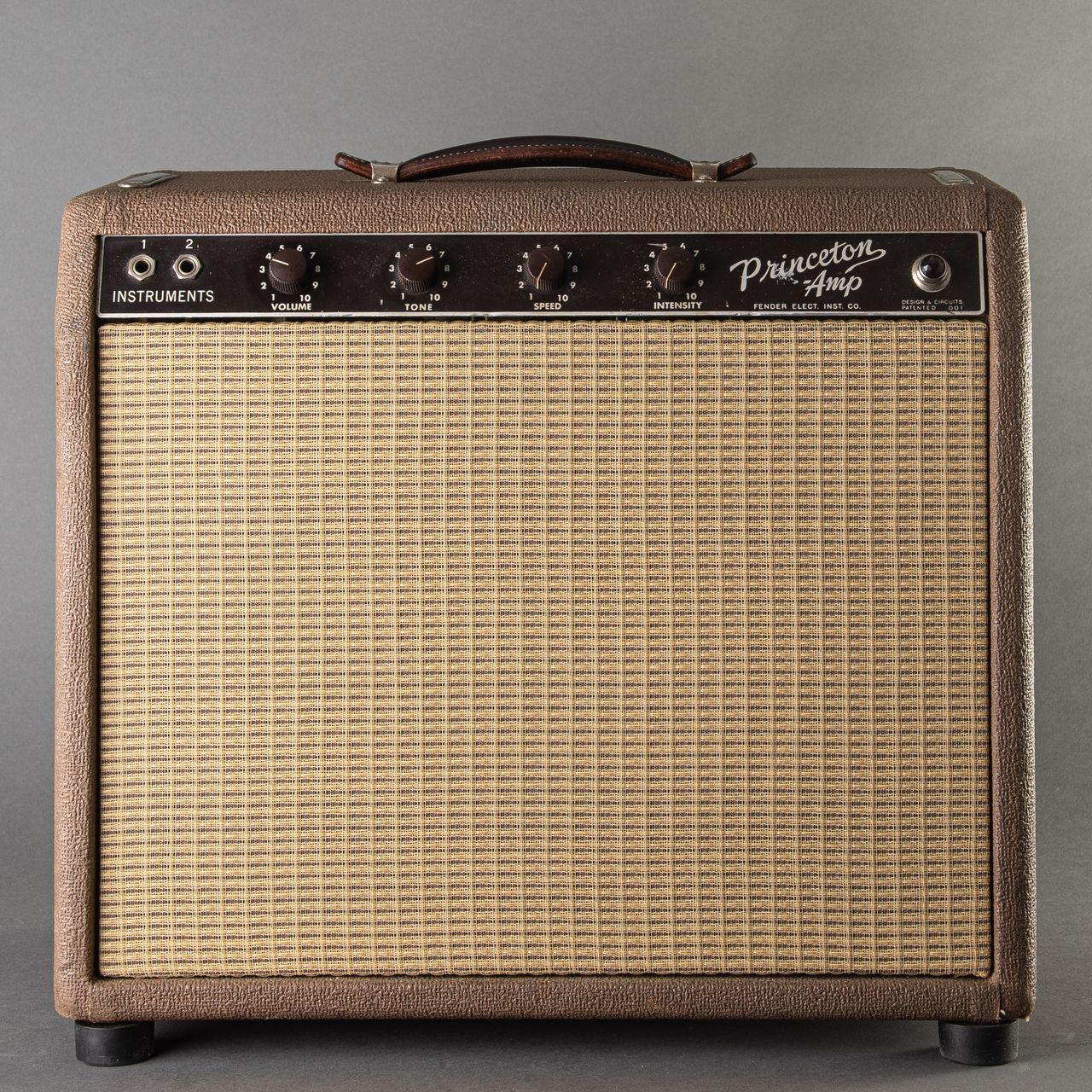
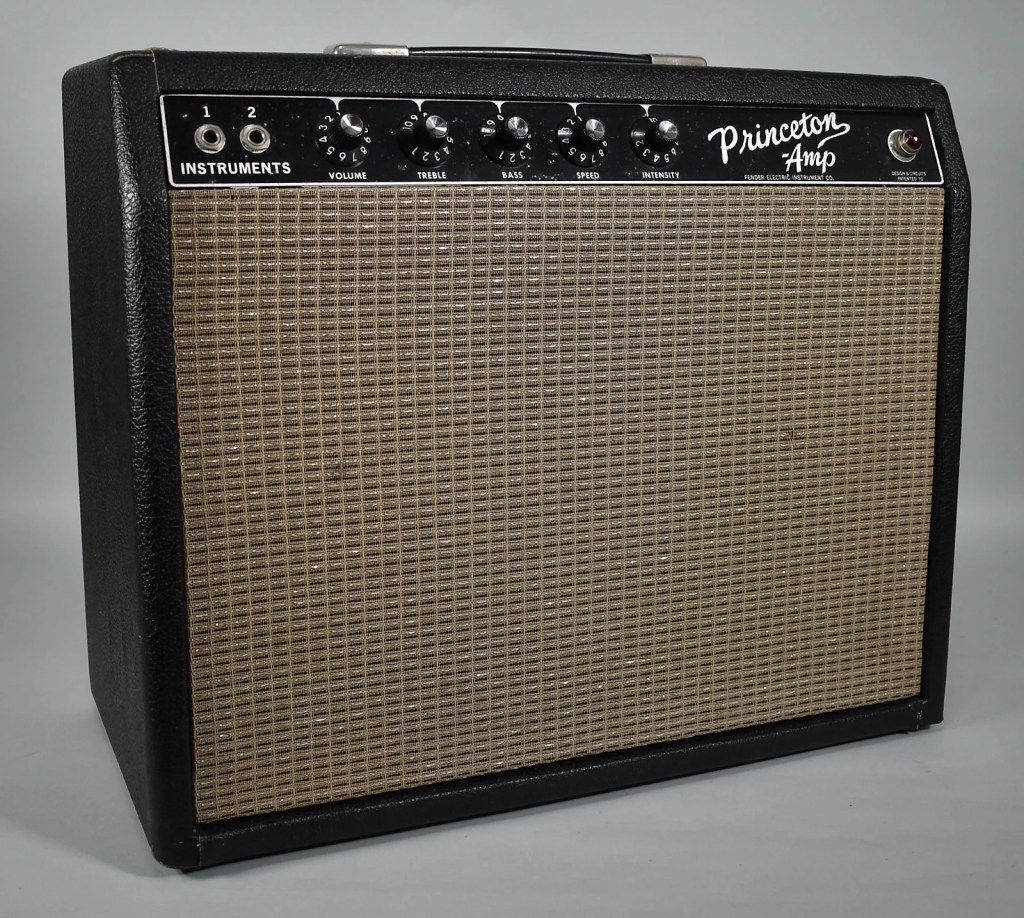
Later on in the early 1960’s, the Fender amp line got a cosmetic update, and the Princeton was now housed in a new cabinet with brown tolex covering and front panel. These changes were not all just for appearance though, as the Princeton how featured Fender’s legendary vibrato circuit. These amps lasted for only about two years and have become celebrated in recent years for their mid-range tone and growly breakup when overdriven.
One of the most iconic iterations of the Princeton is the 1960s “Blackface” version, named for its black control plate. This era is highly sought after by vintage gear enthusiasts for its pristine, warm tone and classic Fender reverb. The Blackface Princeton Reverb became a favorite among recording artists and studio musicians, contributing to the rich, shimmering tones heard on countless classic recordings from that era.
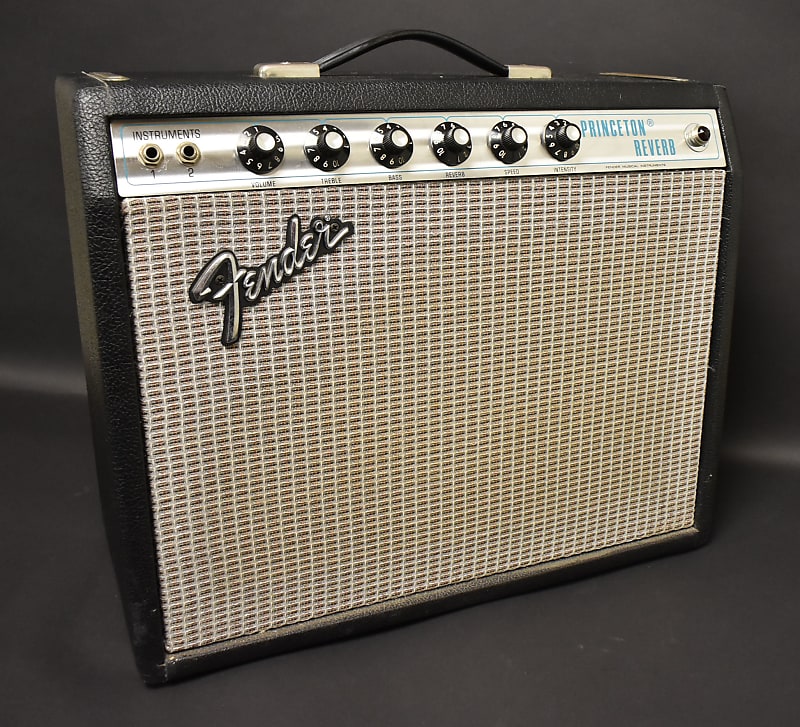
In the mid-1960s, Fender underwent a series of changes in response to market demands and evolving technology. The “Silverface” era saw the introduction of a new silver control plate and a change in circuitry, resulting in a slightly different tonal character. While some players prefer the vintage charm of the Blackface models, others appreciate the distinct characteristics of the Silverface Princeton.
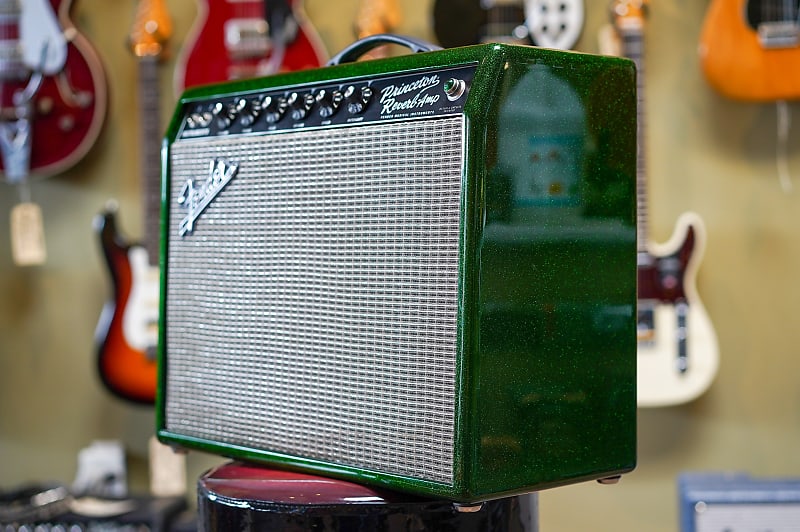
Fender has continued to evolve the Princeton design over the years, introducing reissues and modern iterations that capture the essence of the original while incorporating contemporary features. These newer models often feature improvements such as increased power, updated speaker choices, and even unique limited edition color schemes, catering to the demands of today’s diverse music scene.
The enduring popularity of the Fender Princeton can be attributed to its versatility. Despite its modest wattage, the Princeton has proven itself capable of delivering everything from pristine cleans to gritty overdrive when pushed. Its simplicity in design, featuring basic controls for volume, tone, and reverb (where applicable), makes it easy to dial in a wide range of tones with minimal effort.
Many artists, from jazz players to blues guitarists, have embraced the Fender Princeton as an essential tool in their sonic arsenal. Its responsiveness to playing dynamics and ability to complement a variety of playing styles have made it a modern go-to choice for both stage and studio applications. Whether used as a practice amp at home or a reliable workhorse on tour, the Fender Princeton continues to be a beloved amplifier that has stood the test of time.
 IVG Blog