
By C.
Fender serial numbers play a crucial role in identifying and dating Fender instruments, providing enthusiasts, collectors, and musicians with valuable information about the history and production details of their guitars and basses. Fender, a renowned manufacturer of guitars, basses, and amplifiers, has been using some sort of serial numbering system on their instruments since the early 1950s. While it’s quite a difficult task to commit everything to memory, understanding some particular numbering clues will help you better understand what you’re looking at when it comes to vintage Fender instruments.
Do you have a vintage Fender you’d like to sell? Contact us here
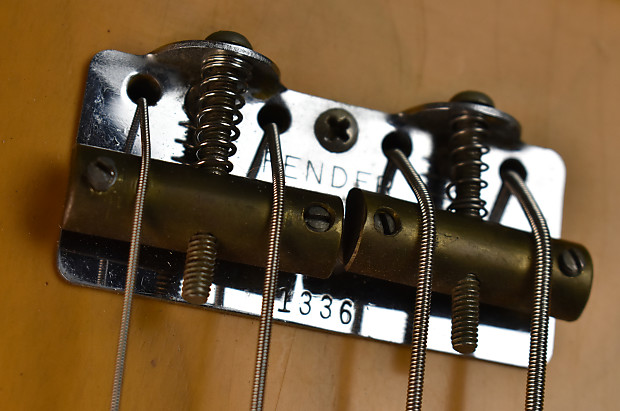
The Fender serial number system has undergone several changes over the years, making it essential for enthusiasts to understand the various formats used by the company throughout these different periods. In the early years, from 1950 to 1954, Fender instruments featured a simple serial number stamped on the bridge plate of the guitar. However, inconsistencies and overlapping serial numbers during this period can make dating certain instruments challenging.
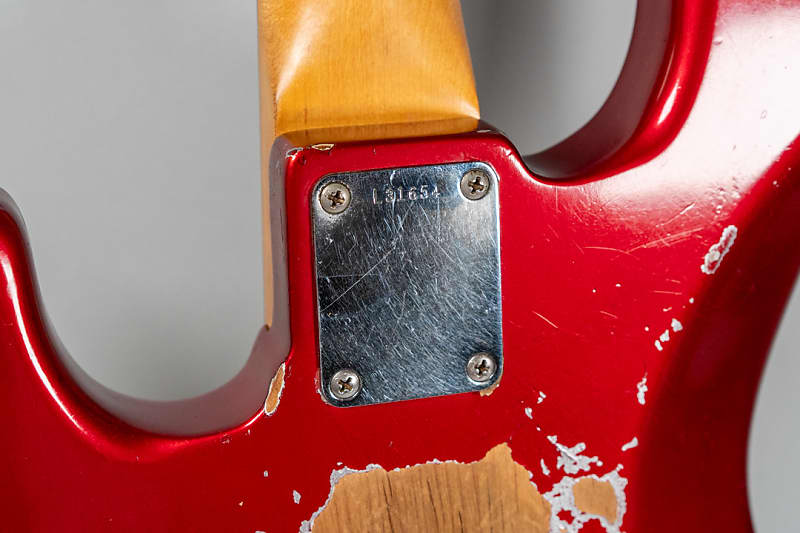
In 1954, the company experimented briefly with stamping numbers on the tremolo cover of their new Stratocaster model before ultimately introducing a more standardized serial numbering system. Guitars from this era would soon have their serial numbers stamped on the neck plate, which is attached to the back of the instrument where the neck is bolted to the body. This system continued until 1976, with some variations in the placement of the serial number on certain models. The serial numbers from this period are crucial for dating pre-CBS (pre-Columbia Broadcasting System) Fender instruments. Also, from 1963-1965, Fender instruments had an “L” prefix stamped with the serial number. This is a useful way to pinpoint guitars and basses built during this time, and have become known as the “L-series”.
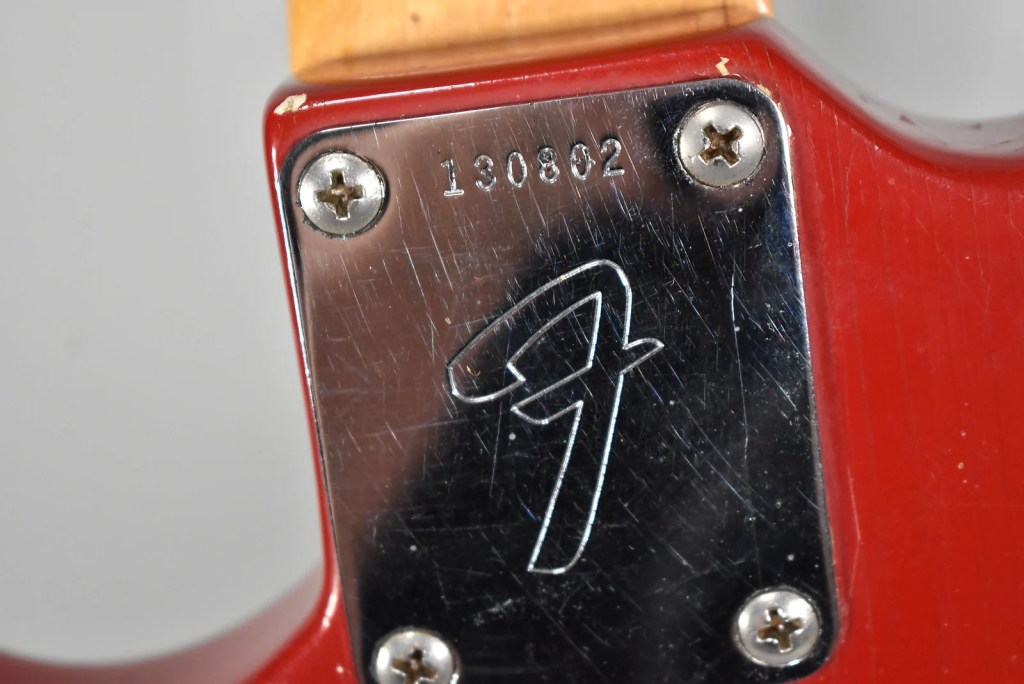
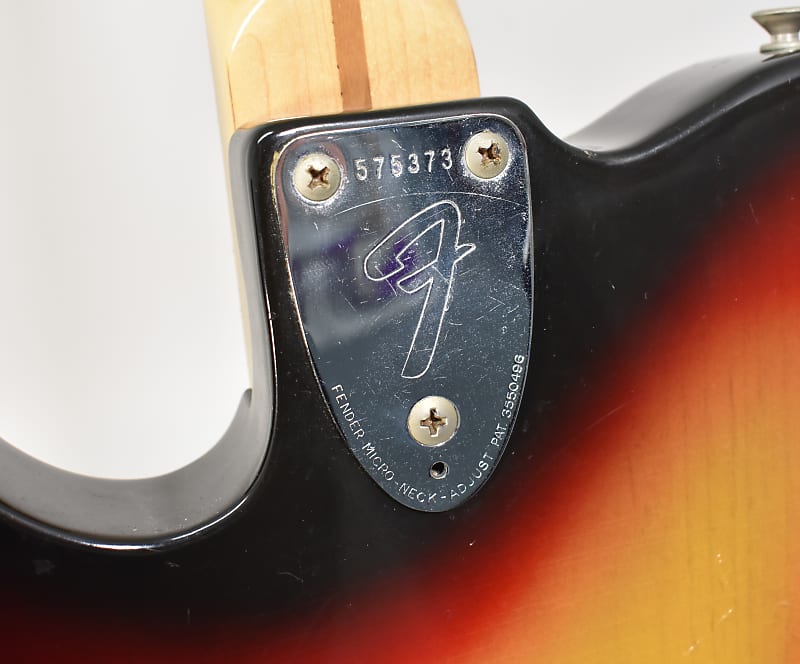
With the CBS acquisition in 1965, Fender underwent changes in its ownership structure, leading to modifications in many things within the company, including the previous serial number system. The introduction of the “F” plate in ’65 marked this transition. Instruments from the late 1960s and early 1970s feature the Fender ‘F’ engraved on the neck plate and serial numbers progressed from five to six digits. The CBS era is known for its many changes in manufacturing processes, designs, and the overall quality of Fender instruments and amplifiers. And 1971 marks the final year of the “4-Bolt” neck plate before they changed to a triangular 3-Bolt, which can also offer further clues to dating an instrument along with the serial number.
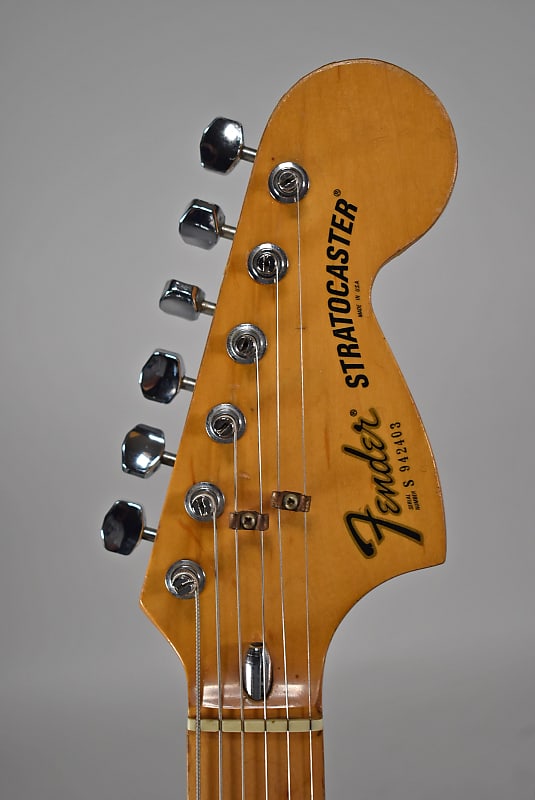
In 1976, Fender introduced a new serial numbering system altogether. Now instruments had a prefix indicating the decade and the specific year of production on the front of the headstock, rather than stamped on the neck plate. This system was fairly consistent until 2010, with slight variations in the format. The serial number now started with a letter indicating the decade (S for the 1970s, E for the 1980s, N for the 1990s, and so on), followed by a six-digit number. The first digit of the six-digit number represented the year of manufacture. Of course, there are some exceptions to the general rule, especially for limited editions and specific years. For example, an instrument with an S9 would generally indicate a manufacture date of 1979, but was also used on builds from 1980 and 1981. Like all major manufacturers, the attempt to perfect a serializing system didn’t always turn out to be 100% reliable.
Post-2010, Fender adopted a 10-digit serial number system, with “US” followed by the first and second digits denoting a specific year. This format has remained in use, allowing enthusiasts to determine the production year of their Fender instruments easily.

Understanding Fender serial numbers is essential for dating instruments, identifying rare models, and assessing the authenticity of vintage guitars. Numerous online resources, including official Fender databases and forums, provide detailed information and tools to help enthusiasts decode and interpret serial numbers accurately. As a result, Fender serial numbers not only serve as a chronological guide to the company’s production history but also contribute to the rich tapestry of information surrounding these iconic instruments.
 IVG Blog