
By C.
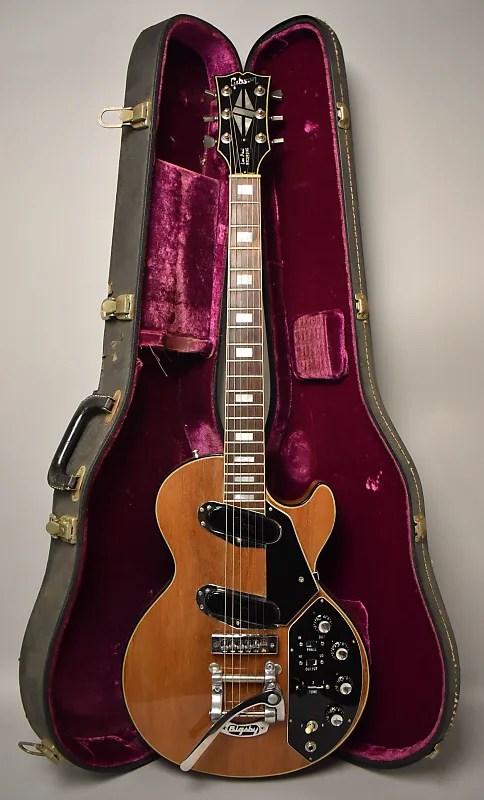
It doesn’t take very long for new guitar players to hear the name “Gibson Les Paul”, as it remains one of, if not the most popular and revered electric guitars of all time. When referencing the model, the majority of people are discussing a “Standard” with dual humbucking pickups, maple top, and a Tune-O-Matic bridge. While Standards are certainly the most recognized example of a Les Paul, the man behind the guitar was always continuing to innovate and re-design his namesake signature model. There have been many variations in the “Les Paul” line, with Custom, Junior, Special, and Deluxe being just a a few examples. But today we’re going to take a closer look at a unique and most unusual model, a 1972 Les Paul Recording
Do you have a guitar you’d like to sell? Contact us here
The Les Paul Recording model is a humble demonstration of the tinkering spirit and forward-thinking approach to electric guitar that Les Paul himself was known for. Introduced in the early 1970s, this unique instrument was a vast departure from the traditional Les Paul designs, catering to the needs of studio musicians seeking enhanced tonal options and more sophisticated electronics.
The Les Paul Recording model was conceived during a time when guitarists were exploring new sounds and demanding greater flexibility in their instruments. Gibson responded to these needs by crafting a guitar that not only retained some of the classic Les Paul aesthetics but also offered a range of features specifically tailored for recording professionals.

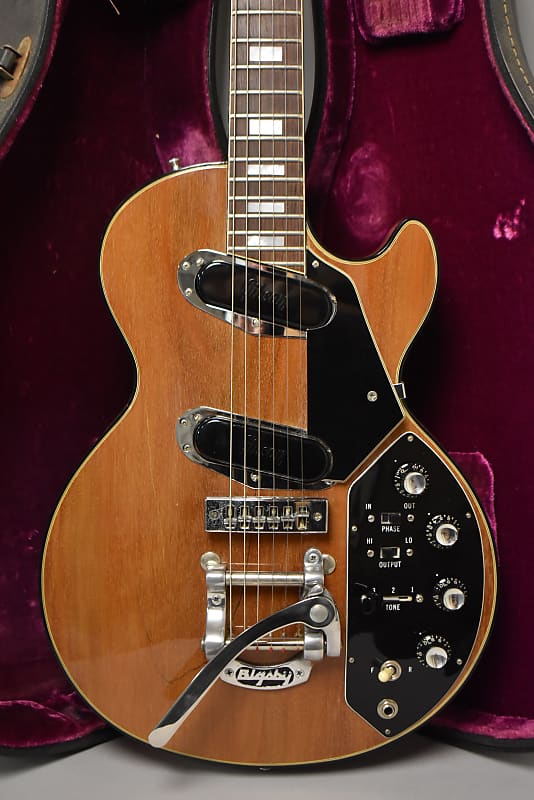
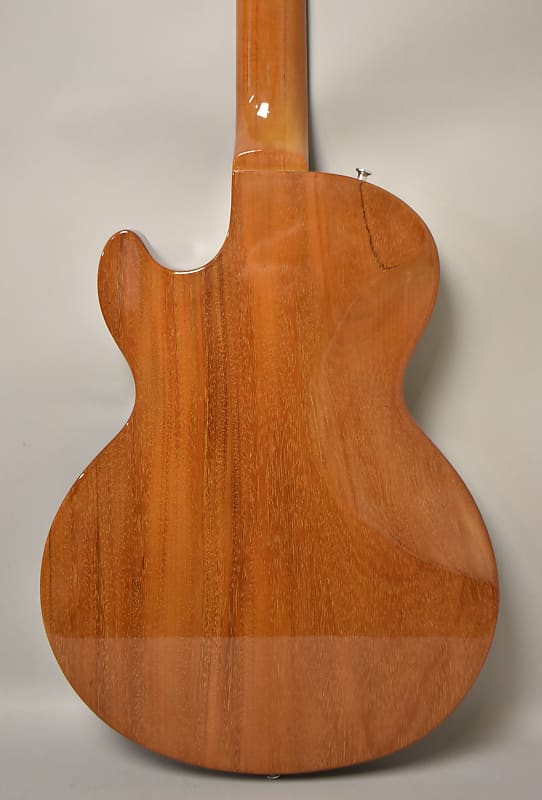
At its core, the Les Paul Recording model boasts a 2-piece mahogany body with a comfort contour on the back and a laminated mahogany neck, delivering the renowned resonance and sustain associated with the Les Paul lineage. However, its distinguishing factor lays within its innovative electronics, setting it apart from its predecessors. The guitar is equipped with low-impedance pickups, a departure from the standard high-impedance pickups found in most electric guitars of that era. This unique pickup configuration allows for a clearer, more balanced output, minimizing noise and interference while offering a broader frequency response. The guitar also has the commonly seen “Harmonica” bridge of this time period, but with an added Bigsby B5 vibrato tailpiece.

This example is a circa 1972, serial numbers on the headstock during the “Norlin” period are notoriously unreliable in terms of dating an instrument. The pots would normally indicate a more precise date, but the codes are heavily obscured from half a century’s worth of patina inside the original electronics. It is in very good cosmetic condition, with a few small dings and some finish cracks on the top.
The Les Paul Recording model showcases a master volume, pickup selector, individual bass and treble controls, phase switch, a “hi-low” impedance control, and a decade control, rather avant-garde features for its time. These controls enabled players to manipulate their sound further, providing unprecedented tonal sculpting capabilities right from the guitar itself. Such onboard electronics were groundbreaking, granting musicians the ability to fine-tune their sound without relying heavily on external equipment.
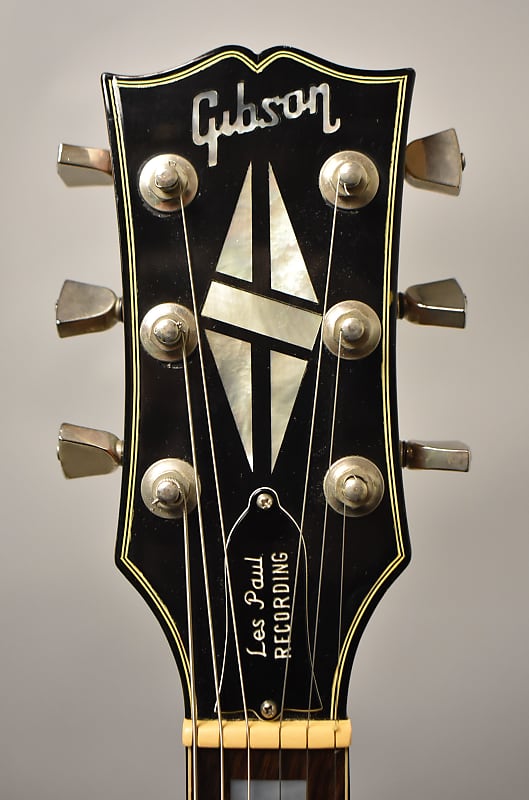
In terms of playability, the Les Paul Recording model features a familiar neck profile and 1 11/16″ nut width, catering to the preferences of players who favored the broader Gibson fretboard over the standard 1 9/16″ synonymous with the late 60’s and 70’s. This ergonomic design choice aimed to enhance comfort and accommodate different playing styles, making it a versatile tool for a wide array of musicians. The original wide-low Gibson frets are in great playing condition, with some playwear to be expected due to age. The rosewood fingerboard features pearloid block inlays and black binding. The headstock is bound similar to a Les Paul Custom, but also with an elegant 5-ply black binding. The model also features factory Grover Rotomatic tuners, which was a common modification players performed on earlier Les Paul models with Kluson Deluxe tuners.
While the Les Paul Recording model didn’t achieve the same commercial success as its predecessors, its significance lies in its pioneering spirit and forward-thinking approach to guitar design, which is what Les Paul had always intended to do in all of his endeavors. The low-impedance pickups and onboard preamp were trailblazing innovations for the era that paved the way for future developments in guitar technology.
Despite being discontinued several years after its launch, the Les Paul Recording model has garnered a dedicated following among guitar enthusiasts, studio musicians, and collectors alike. Its rarity and distinctive features make it a sought-after instrument in the vintage guitar market, cherished for its historical importance and unique sonic capabilities.
The Gibson Les Paul Recording model remains a testament to Gibson’s commitment to pushing the boundaries of guitar design and technology. Its innovative features, coupled with the timeless appeal of the Les Paul aesthetic, ensure its place as a significant and revered piece in the history of electric guitars. If you’re particularly fond of these unique and increasingly rare guitars, this clean and early example may be one to consider for your collection.
 IVG Blog