
By C.
The Ampeg Dan Armstrong guitar holds an iconic status in the world of rock music, revered for its innovative design, distinctive tone, and significant influence on the evolution of modern electric guitars. Created in the late 1960s by renowned designer Dan Armstrong, this instrument broke traditional molds with its transparent acrylic body, unconventional construction, and versatile sonic capabilities.
Do you have a vintage guitar you’d like to sell? Contact us here
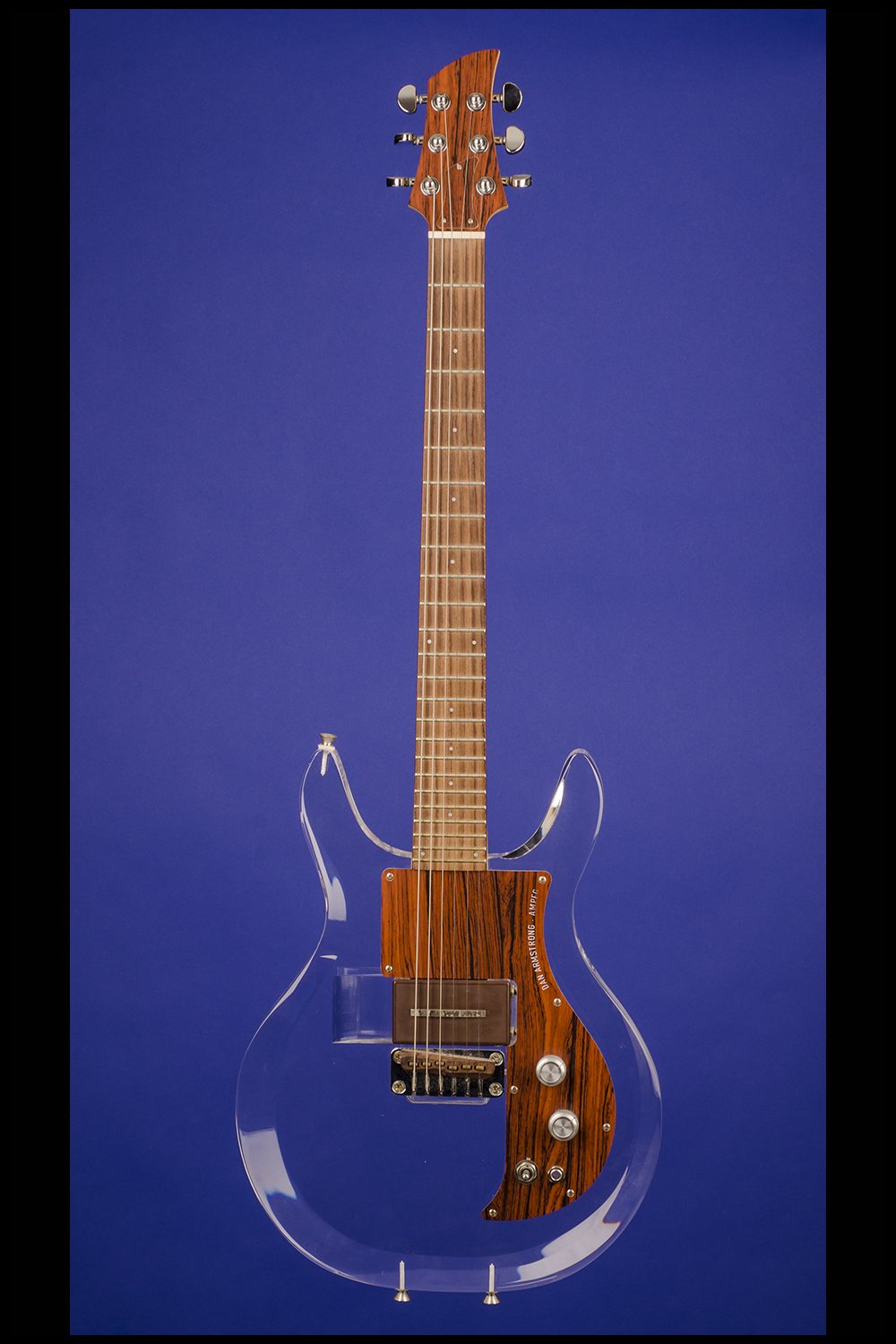
At its core, the Dan Armstrong guitars and basses stood out due to their transparent bodies, a departure from the solid and semi-hollow wood bodies that were the norm at the time. Crafted from a clear acrylic material called “Lucite”, this guitar offered a visually striking appearance that captured the attention of musicians across the globe. Its see-through body exposed the inner workings, providing a unique view of the instrument’s components—a bold departure from the usual opaque designs.

The modular nature of the Dan Armstrong guitar is another unique feature of these instruments that set them apart from the crowd. Instead of a traditionally installed set of pickups, Armstrong’s design featured interchangeable pickups, allowing players to effortlessly switch between different types of pickups to achieve diverse tones. These pickups, known as “sliding pickups,” could be easily removed and replaced, offering players the flexibility to experiment with various sounds and customize their tone to match different musical styles and preferences. Each pickup offered a distinct voicing and were advertised under the names of “rock treble”, “rock bass”, “jazz bass”, “jazz treble”, “country & western bass” and “country & western treble”.
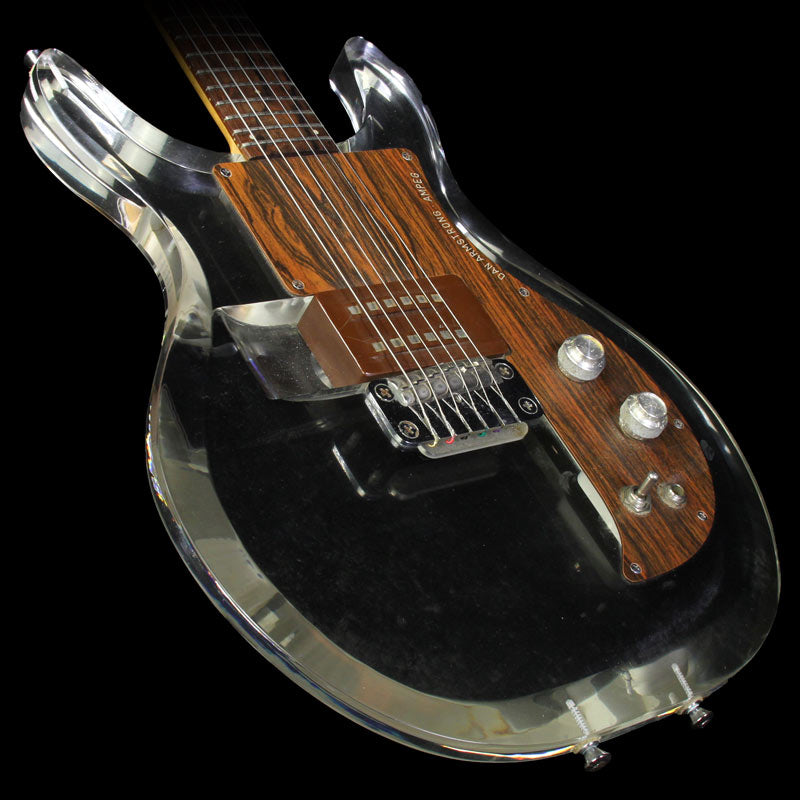
One of the most notable features of the Dan Armstrong guitar was its ability to deliver a distinctive, clear, and powerful tone, regardless of pickup choice. The acrylic body contributed to its unique sound profile, producing a sonic ‘flavor’ unlike that found in a wooden guitar or bass. And paired with the many different pickup options, players were able to explore a wide spectrum of tones, ranging from crisp and bright to warm and robust, catering to a variety of genres and styles.

The impact of the Dan Armstrong guitar extended beyond its innovative design. Its association with legendary musicians further solidified its place in music history. Notably, Keith Richards of The Rolling Stones prominently used the Dan Armstrong guitar during the band’s iconic 1969 American tour, showcasing its capabilities to a global audience. Richards’ use of this guitar contributed significantly to its popularity and cemented its place as a coveted instrument among musicians seeking unique sounds and versatility.

Some years later, the Ampeg Dan Armstrong was further popularized to a different audience with Greg Ginn of California punk rock act Black Flag. Ginn used the Dan Armstrong guitar for much of his career, and its signature look and sound contributed greatly to the band’s abrasive sound. Many other artists have also embraced the Dan Armstrong at one point or another, including (but not limited to): Ronnie Wood, Dave Grohl, Geezer Butler, John Frusciante, David Gilmour, and J Geils.
Despite its initial success and acclaim, production of the original Dan Armstrong guitars was relatively short-lived, ending in the early 1970s. However, the instrument’s legacy endured through the years, influencing subsequent generations of guitarists and collectors. Its scarcity in the market only added to its mystique, driving up demand among enthusiasts eager to own a piece of music history.
In more recent times, the Dan Armstrong design has experienced a revival, with companies reissuing and recreating variations of the iconic guitar since the 90’s. Modern interpretations often incorporate contemporary components and improvements while staying true to the essence of Armstrong’s visionary concept.
The enduring appeal of the Ampeg Dan Armstrong guitar lies not only in its revolutionary design but also in its ability to inspire creativity and push the boundaries of what an electric guitar can achieve. Its transparent body, modular pickups, and diverse tonal palette continue to captivate musicians, ensuring that its influence on music remains an enduring legacy in the world of guitars.
 IVG Blog