
By C.
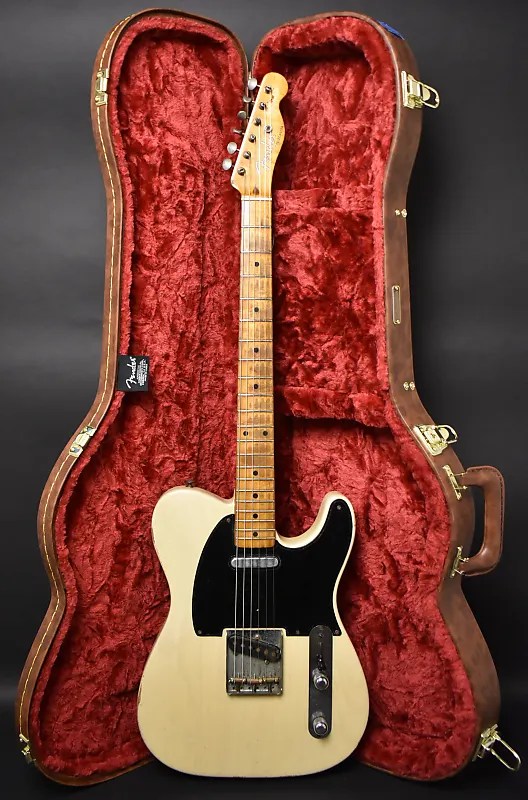
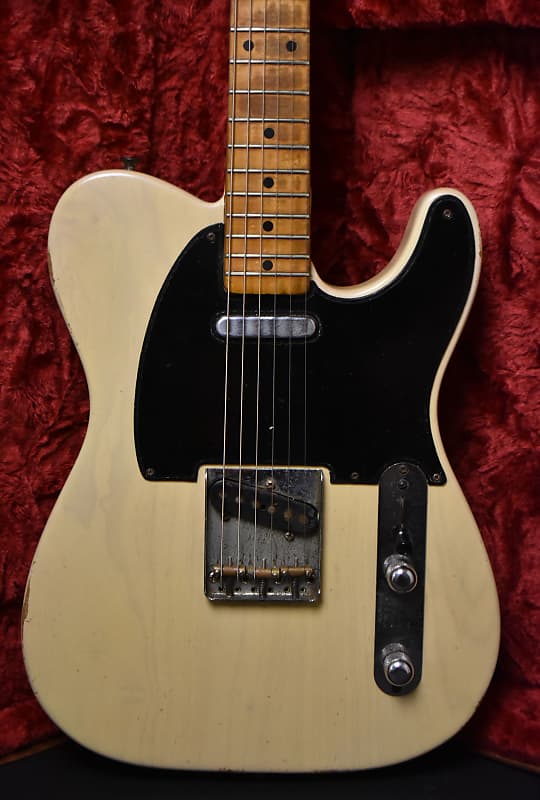
Good evening, people of cyberspace. We’re back bringing you another episode of “In The Shop” with none other than a ’53 Blackguard Telecaster! This one is an exceptional “player grade” piece that’s sure to make all the twang enthusiasts drool (just not on the rug, please!).
For those of you that aren’t quite up to speed on the Telecaster, have no fear. We’ll be delving into a bit of history to cover why the Telecaster is so important, and why this particular one deserves your full attention.
Do you have a guitar you’d like to sell? Contact us here
The Fender Telecaster, often called the “Tele,” emerged in the early 1950s and essentially shifted the course of the music industry and guitar manufacturing as a whole. With its distinct sound, innovative design, and enduring appeal, the Telecaster has been used on countless recordings by artists all over the world since it was released to the public over seventy years ago. It’s undoubtedly the most significant electric guitar design of all time. Introduced by Leo Fender in 1950 as the “Broadcaster”, the guitar stood out for its simplicity, functionality, and versatility, quickly becoming a cornerstone of modern music across genres from country, rock, and blues, to jazz and even heavy metal.
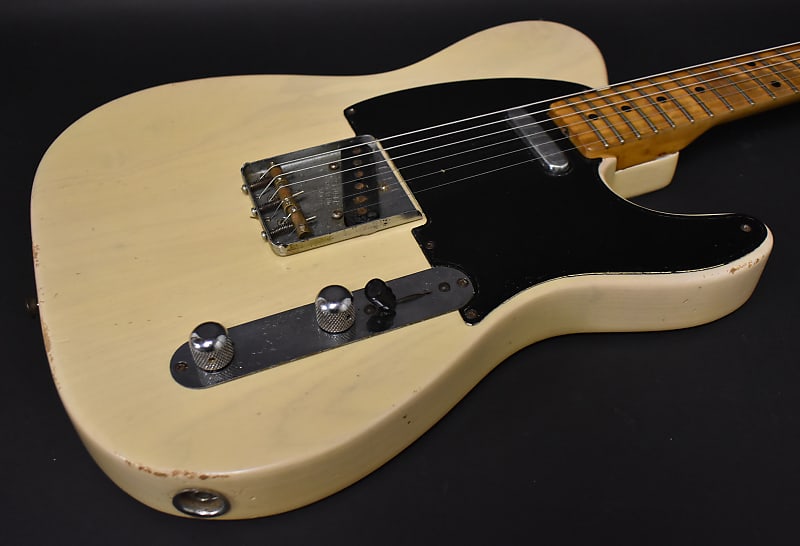
The early Broadcaster name didn’t last too long and the guitar became the “Telecaster” in 1952 following a cease and desist order from Gretsch, who owned a trademark for their “Broadkaster” line of drums. At its core, the Broadcaster/Telecaster boasted a minimalist yet elegant design. Its solid-body slab construction marked a departure from traditional hollow-body guitars, making it more resistant to feedback and capable of handling higher volumes. Like all Teles of this era, this ’53 features a single-cutaway ash body, a bolt-on one piece maple neck, and a pair of single-coil pickups—a configuration that remains largely unchanged today due to its timeless effectiveness.
The Telecaster’s distinct tone is a result of its pickups. These original models were equipped with two single-coil pickups: one near the bridge and one near the neck. This setup makes for a bright, snappy sound with exceptional clarity and a biting edge that became known as the signature Telecaster “twang”. The tele sound is perfect for crisp rhythm playing and searing lead lines. The bridge pickup delivers a cutting, treble-heavy sound, while the neck pickup produces a warmer, rounder tone, giving players a wide sonic palette to explore.
This ’53 has all the tones and sonic nuances on tap that have made the guitars so famous through all these years, particularly in country and rock music. The black bottom pickups are original with the exception of a professional rewind on the bridge pickup.
The Telecaster’s playability and reliability also contributed to its extreme popularity. The bolt-on neck design made repairs and adjustments easier, and the guitar’s sturdy construction ensured its durability on the road. Leo Fender’s original idea was that when you wear the frets down, just get a new neck! Quite an idea, though most players preferred to keep their beloved necks on and opt for a simpler refretting of the neck, as has also been performed on this Tele.
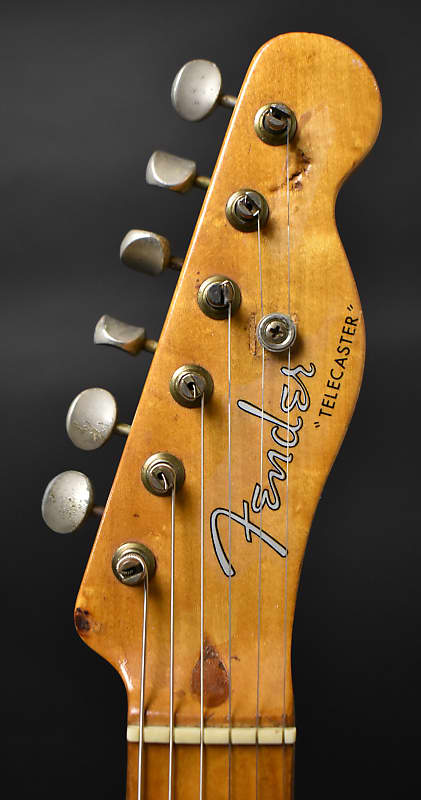
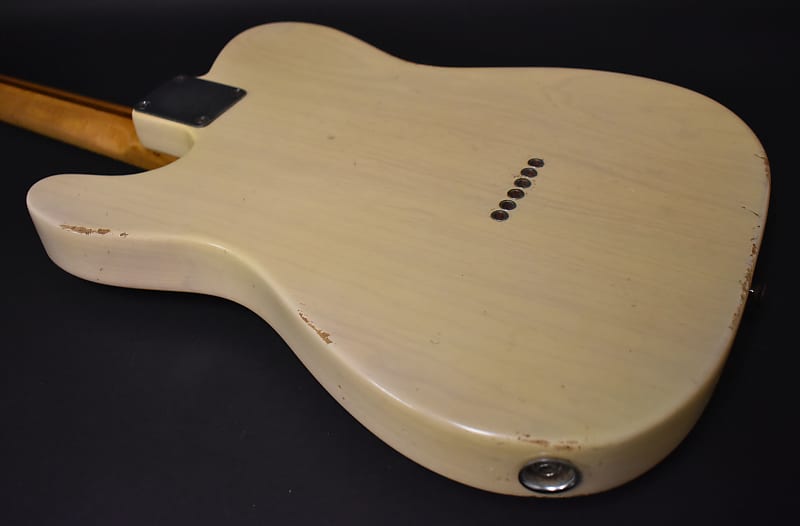
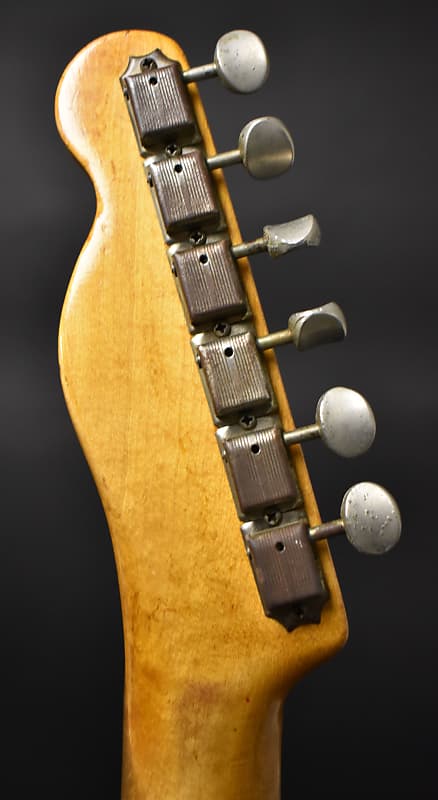
This Blackguard has certainly been played throughout the course of its life and has had a bit of restoration work to ensure that it remains suitable for decades of twangin’ ahead. With an expert body refinish in a wonderful light “Butterscotch Blonde” in the correct un-plasticized Nitrocellulose lacquer, this Tele is a real show stopper! The figured maple neck has also been refinished and re-decaled, but still shows some of its previous road wear beneath.
At one point, a previous owner decided it might be fashionable to paint binding around the pickguard. The paint was removed prior to our acquisition, but has a shadow where it once was. These are some commonly seen alterations of guitars of this age. Some have lived colorful lives long before they fetched such high prices as rare and collectible instruments. This is one of those guitars. If you’re looking for an untouched museum-grade piece this one may not be for you. But as a true workhorse pre-CBS Blackguard at a fraction of the cost of a mint example, it certainly fits the bill.
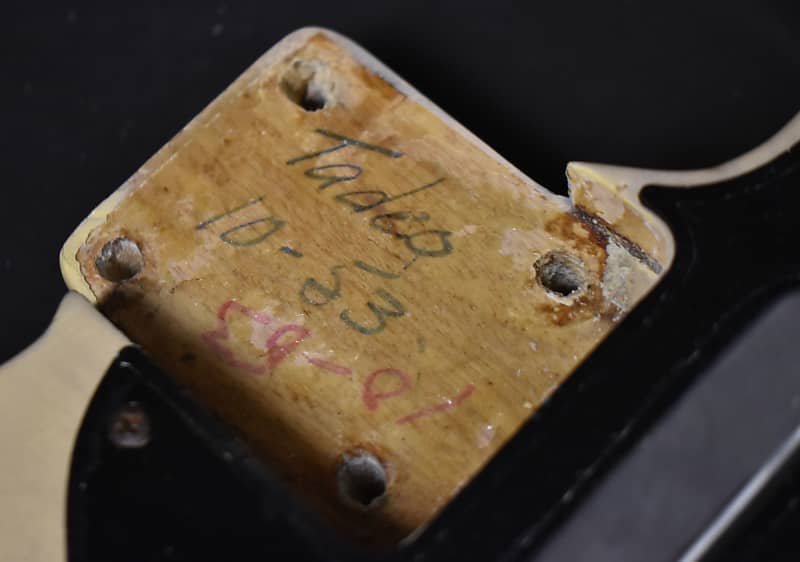
The thing really plays, I mean really. Seriously. We get to put our hands on plenty of great guitars here at IVG, but this one is really something else. That neck profile is what we all read about in the many books about these instruments. It’s smoothness, depth and hand shaped profile just can’t be beat. It doesn’t hurt to mention that the neck pocket features the signature of Tadeo Gomez, one of the most legendary Fender employees who is responsible for lots of Fender’s guitars of this early period. It is said that Tadeo shaped some of the absolute best feeling Fender necks of all time, and we’d have to agree.
The Telecaster’s impact on music history cannot be overstated. It became the instrument of choice for numerous influential musicians. From country legends like Merle Haggard and Buck Owens to rock pioneers such as Keith Richards and Jimmy Page, the Telecaster found a place in the hands of countless artists who shaped the musical landscape. The Tele has even found its way into more extreme Metal with artists like Jim Root and John 5, who have utilized the guitar in their music and even customized and modified certain elements of the design to fit their playing needs.
Moreover, its simplicity encouraged modifications and customization, leading to the birth of the “partscaster” culture, where musicians would mix and match components to create their own unique versions. This DIY ethos contributed to the guitar’s versatility and adaptability across diverse musical genres.
Over the years, Fender has released various iterations and special editions of the Telecaster, catering to evolving player preferences while retaining the essence of the original design. Since the late 80’s, the Fender Custom Shop also has produced Telecasters replicating this very same era of “Blackguards” built from 1952-1954. This ’53 is one of the originals. Often imitated, never duplicated! While the reissues of all types are quite a bang for your buck, if you’re serious about owning a true Blackguard Tele, and a special one at that, you might owe it to yourself to take a look at this guitar.
The Fender Telecaster from the 1950s stands as a testament to Leo Fender’s visionary approach to guitar design. Its simplicity, versatility, and distinctive “twang” has solidified its place as an icon in the world of music, captivating generations of musicians while forever leaving its signature in the history books of electric guitars. I mean come on, just look at it..
 IVG Blog