
By Randy “ToneMaster” Thompson
Fender pickups, those magnetic marvels beneath the strings, have undergone a fascinating evolution over the years. Each era of Fender’s history has brought forth innovations, experimenting with designs, magnets, and winding techniques, shaping the distinctive tones that define Fender guitars. Let’s journey through the different eras of Fender pickups, tracing the sonic footsteps of countless musicians across genres and generations.
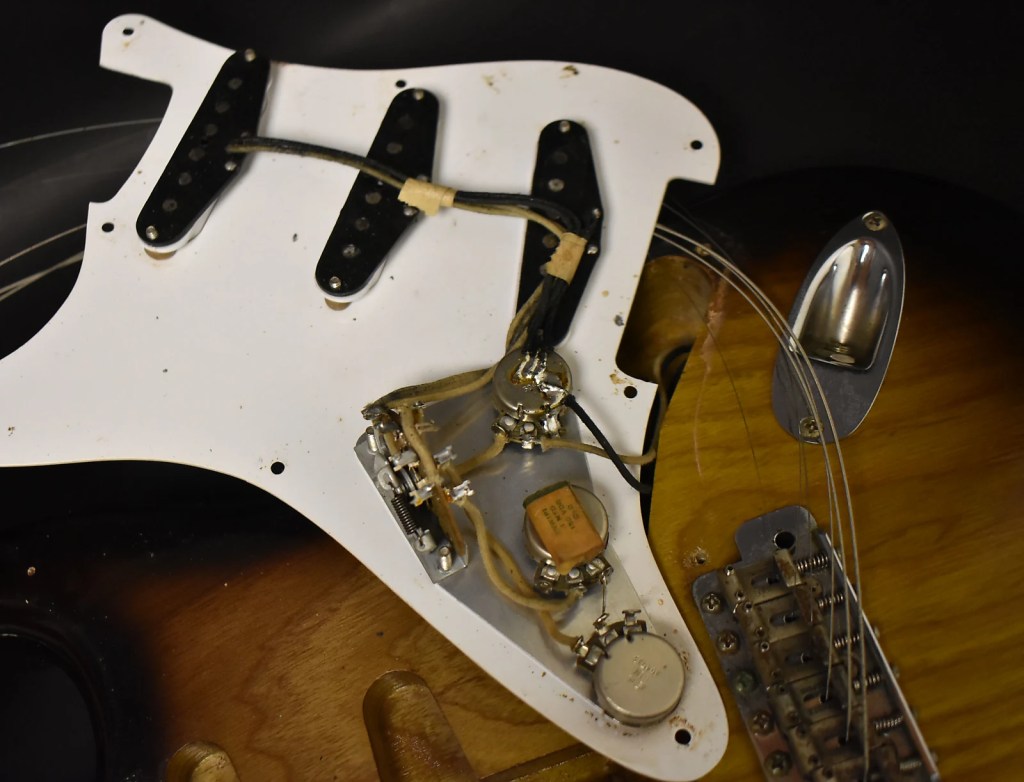
1. Pre-CBS Era (1950s to 1965):
The earliest Fender pickups, often referred to as “black-bottom” pickups due to their black fiberboard bottom plates, were characterized by Alnico III magnets. These pickups, found on iconic models like the Stratocaster and Telecaster, exuded a warm, bell-like tone with pronounced midrange frequencies. The Stratocaster’s single-coil pickups, featuring staggered pole pieces, became synonymous with the smooth, glassy tones heard on countless recordings.
Do you have a guitar you’d like to trade? Contact us here!
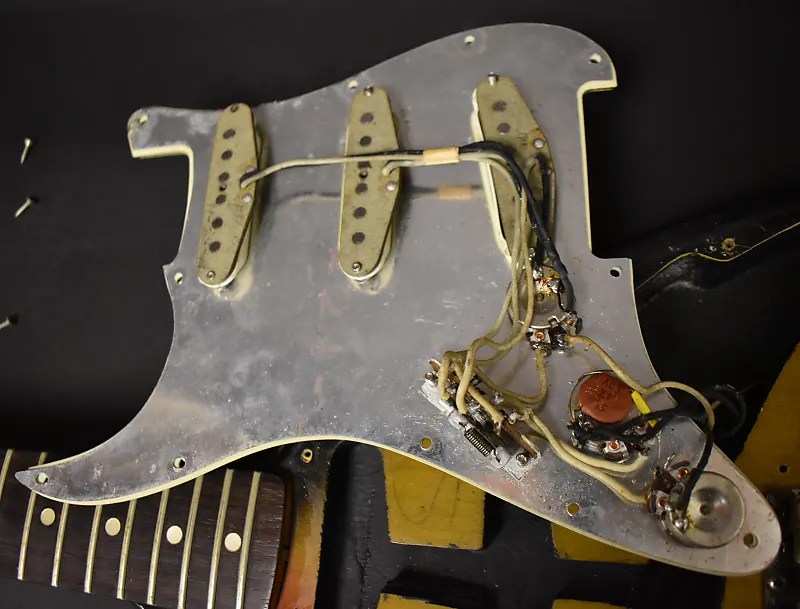
2. Transition Era (1965 to 1971):
In the mid-1960s, Fender transitioned from black-bottom pickups to “gray-bottom” pickups, which had gray bobbin flatwork and black vulcanized fiber bottoms. Alnico V magnets became standard during this era, offering a stronger magnetic field and a slightly brighter, snappier sound. These pickups were featured on guitars produced during Fender’s CBS ownership and are revered for their classic vintage tone.
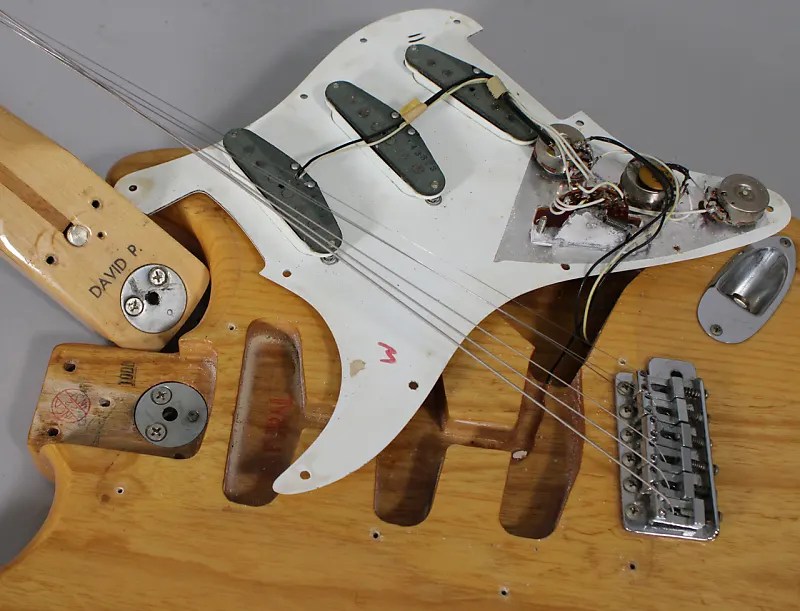
3. Post-CBS Era (1971 to Late 1970s):
The 1970s saw a shift in Fender’s pickup design. Microphonic feedback issues led to the introduction of “molded” pickups, which were encased in epoxy to minimize unwanted noise. However, some players found these pickups lacking the vintage warmth and clarity, leading to a preference for earlier models. Despite this, the ’70s pickups found favor among certain musicians, contributing to the distinct tones of that era’s music.
4. Modern Era (1980s to Present):
The late 1970s and 1980s marked a resurgence of interest in vintage Fender tones. Fender responded by introducing various reissue models with pickups designed to replicate the sound of the golden era instruments. Advances in manufacturing techniques allowed for more consistent winding and magnet quality, enhancing overall pickup quality and tone.
Additionally, Fender began experimenting with different pickup configurations. The introduction of noiseless pickups in the 1990s addressed the single-coil hum issue, making them popular among players seeking noise-free vintage tones. Fender also expanded its lineup to include hot-rodded pickups with higher output, catering to the demands of modern rock and metal players.
5. Custom Shop and Signature Models:
The Fender Custom Shop and Signature series have further diversified Fender’s pickup offerings. Master builders and renowned artists collaborate to create pickups tailored to specific playing styles and tonal preferences. From vintage-accurate reproductions to innovative designs, these pickups represent the pinnacle of Fender’s craftsmanship and tonal expertise.
In conclusion, Fender pickups have traversed a remarkable journey, from the warm tones of the ’50s to the noiseless innovations of the modern age. Each era has left its sonic footprint on the music landscape, inspiring generations of musicians. Whether it’s the vintage allure of the black-bottom pickups or the modern versatility of Custom Shop creations, Fender pickups continue to shape the sounds of guitars and musicians across the globe, embodying the spirit of innovation and tradition that defines the Fender legacy.
Do you have a vintage guitar to sell? Contact us here!
 IVG Blog