The 1960s were a transformative period in the world of electric guitars, marked by groundbreaking innovations and the emergence of several iconic models that would steer the course of modern music. Among the many popular guitars that emerged during this decade, the stereo model electric guitars stand out as both a product of their time and a testament to the unique charm of vintage instruments.
Do you have a vintage guitar you’d like to sell? Contact us here
Stereo electric guitars, which were primarily produced by Gibson and to a lesser extent other manufacturers like Gretsch and Rickenbacker, featured a unique stereo pickup system. This innovative design allowed guitarists to send different pickup signals to two separate amplifiers or channels, creating a spatial and immersive sonic experience that was unheard of before the 1960s.

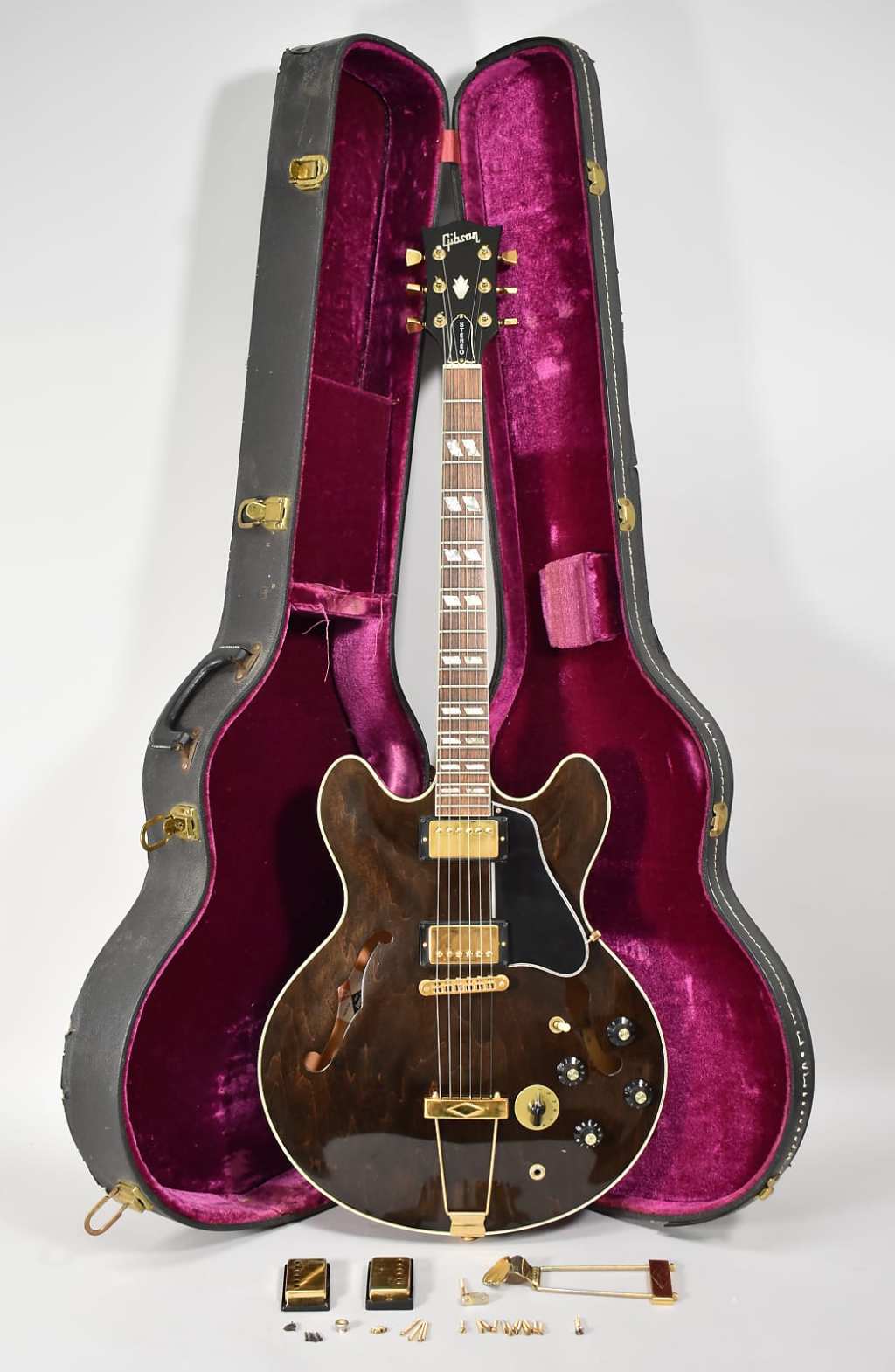
Gibson, a pioneering company with a rich history in guitar manufacturing, introduced its first stereo model electric guitar in 1959. The Gibson ES-355TD-SV, often simply referred to as the ES-355 Stereo, was the new stereo version of the mono ES-355 released one year earlier. This guitar featured two humbucking pickups as the previous version, but with a unique input jack that required a particular TRS Y-cable to unlock the stereo function, and by doing so players could send the signals from each individual pickups to two separate amplifiers. This ability offered a rich and wide-ranging tonal palette, which was particularly popular in genres like jazz, where depth and dimension in sound were highly valued. The ES-355 was favored by many guitarists, including legendary bluesman B.B. King. In fact, B.B. King’s iconic “Lucille” was a modified ES-355 Stereo, demonstrating the guitar’s ability to provide a signature blues tone that would be emulated by generations of guitarists to come.
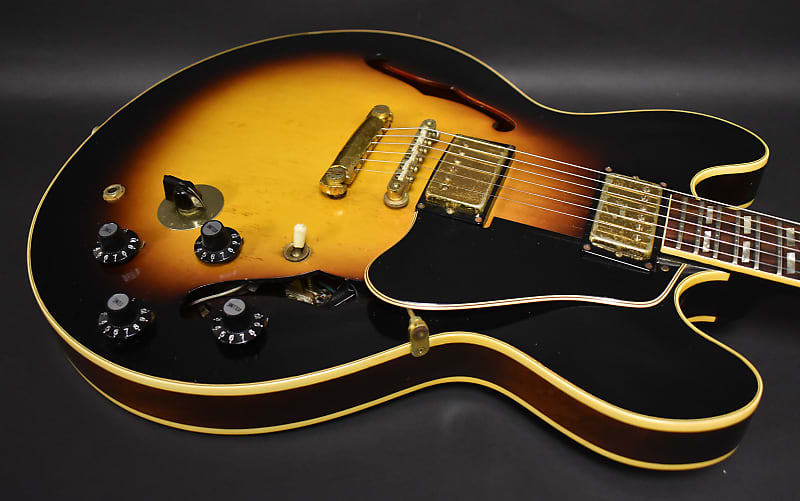
Another notable stereo guitar from this period was the Gibson ES-345TD-SV, like this 1968 Gibson ES-345TD we have here for sale at IVG. A a sibling to the ES-355 and 335 models, the “SV” also boasted two humbucker pickups, but with a stereo jack and the onboard Varitone circuit. ES-345’s also had more scaled-down appointments than the 355, but the stereo jack and Varitone put them in a slightly higher price bracket than the simpler ES-335 model when purchased new from Gibson.

While Gibson stereo models are probably the most recognizable, Rickenbacker was another manufacturer who had their own, albeit similar stereo model guitars. These models had two separate input jacks, labeled “Standard” And “Rick-O-Sound”. The Rick-O-Sound jack was essentially the same concept as the Gibson stereo jack, as it required a TRS splitter cable to route each pickup to different destinations. Many Rickenbackers from the 60’s and even 70’s featured the Rick-O-Sound option and played a part in giving the guitars a unique tonal variety.
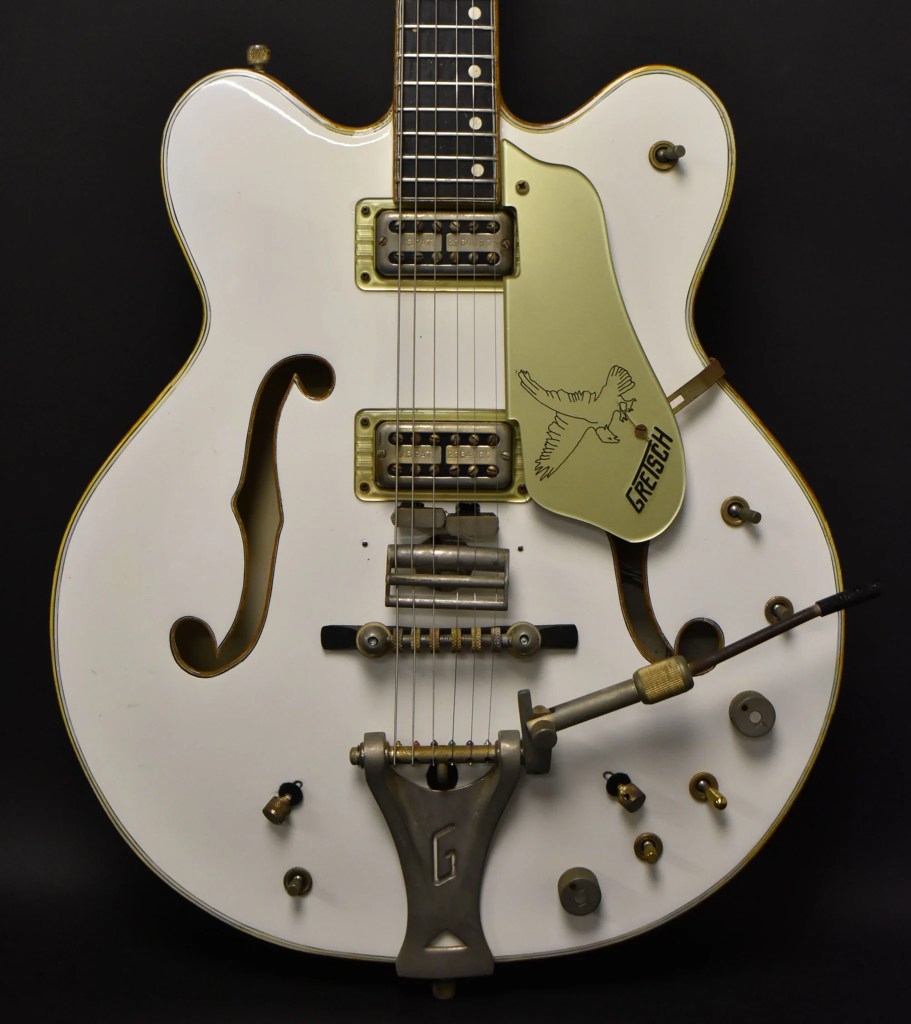
Gretsch also followed suit in the 60’s with a stereo option on certain models, as seen on this 1967 White Falcon. Stereo versions of particular Gretsch models as usually rare and not as commonly found as they are on Rickenbackers or even Gibsons. While the concepts in functionality were essentially shared between all manufacturers, these designs were certainly products of their era and coincided with the emerging stereo craze for recording in the studio and pressing albums on vinyl.
While these guitars were initially embraced by jazz and blues players for their tonal complexity and warmth, they found their way into the hard rock, psychedelic and even progressive music scenes as the decade progressed. The ES stereo models have been seen in the hands of many world renowned guitarists like Alex Lifeson and Steve Howe, who appreciated the instrument’s tonal versatility and unique aesthetic.
The stereo model electric guitars of the 1960s may not have achieved the same level of popularity as some other classic models like the Gibson Les Paul or Fender Stratocaster, but their unique design and exceptional tonal capabilities make them highly sought after by collectors and vintage guitar enthusiasts today. These instruments encapsulate a bygone era of technical development and creativity in the world of electric guitars, reminding us of the lasting impact of our favorite 60’s and 70’s records and the instruments that made it all possible.
 IVG Blog