
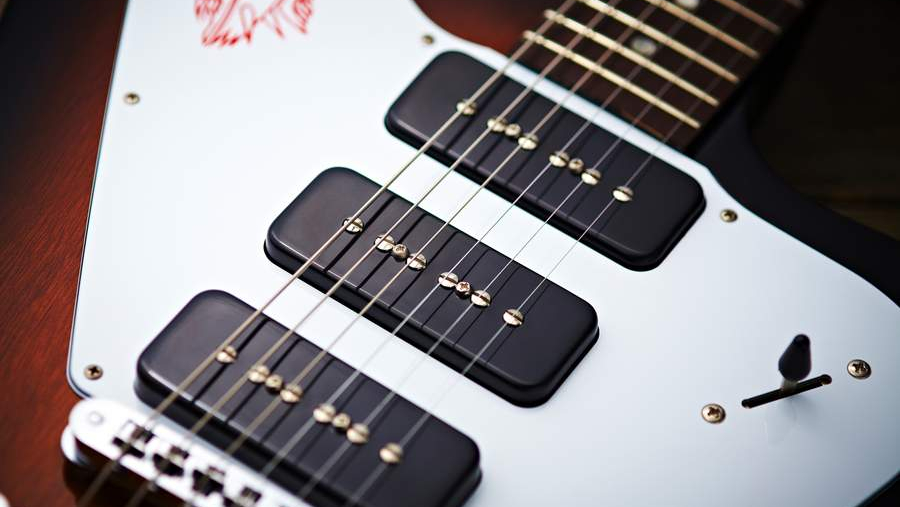
We all know that pickups are an essential component to defining a guitar sound. But with so many options to choose from, how can we be sure we’re using the right tool for the job? In this series, we’ll be exploring some of the most popular options when it comes to selecting pickups and the sonic options they can offer guitarists on a quest for tone.
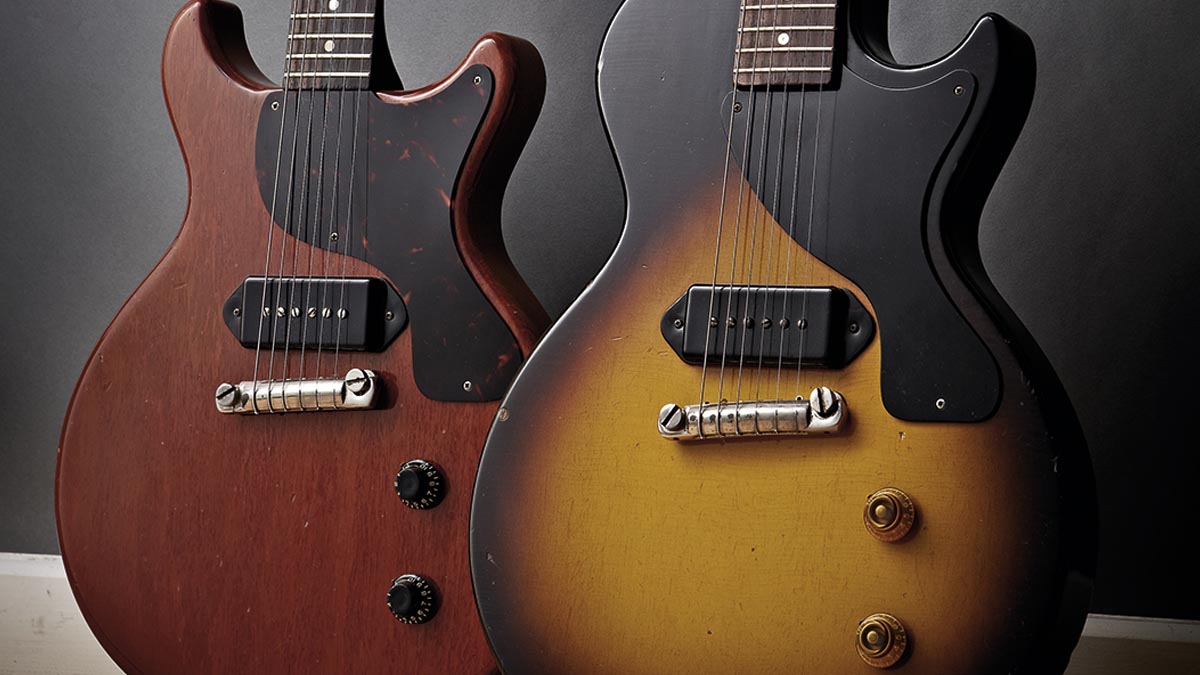
Up first is the Gibson P-90 pickup, an iconic and highly revered component in the world of electric guitar pickups. P-90’s are well known for their unique tonal characteristics and versatility, and have made their mark in the history of electric guitar music. In this short exploration, we will delve into the origins, design, sound, and influence of P-90 pickups.
The origins of the P-90 pickup can be traced back to the late 1940s when it was first introduced by the Gibson Guitar Corporation. Prior to the P-90, many of Gibson’s electric guitars featured a rail-type single-coil pickup known as the “Charlie Christian” (named after the American Jazz guitarist). However, the P-90 was a revolutionary departure from this established design. The new P-90 pickup was designed to provide a powerful, versatile, and dynamic alternative for guitarists, which it certainly achieved.

One of the most distinctive features of the P-90 is its single-coil design, but it is significantly larger and wider than the standard single-coil pickups found in Fender Stratocasters and Telecasters. The P-90 is characterized by its soapbar or dog-ear shape, depending on the model. Its larger bobbin size allowed for more wire windings, resulting in a hotter and punchier output. This unique construction gives the P-90 a distinct tonal quality that falls somewhere between a single-coil and a humbucker, offering the best of both worlds.
Do you have a guitar you’d like to sell or trade? Contact us here
In terms of sound, the P-90 pickup is celebrated for its bright, articulate, and warm tones with a pronounced midrange presence. The P-90’s output is hot enough to provide a satisfying crunch when pushed through an overdriven amplifier, making it a favorite among blues and rock players. Its tonal balance gives chords a clear and chime-like quality, and the P-90 excels in producing a creamy, sustaining lead tone that can rival humbuckers in terms of sustain.

There are many notable Gibson models that feature one, two, or even three P-90 pickups. Les Paul Standards from 1952-1957 are a good example, such as this ’53 Les Paul Goldtop for sale here at IVG.
The P-90 pickup’s versatility makes it well-suited for a wide range of musical genres. While it is often associated with rock and blues, it is equally at home in jazz, punk, and even some forms of country music. Artists like Neil Young, Johnny Thunders of the New York Dolls, and Scotty Moore, who played alongside Elvis Presley, have all contributed to the enduring legacy of the P-90 pickup. Even artists like David Gilmour, who is most associated with Stratocasters, used a P-90 equipped 50’s Les Paul to record the solo on Pink Floyd’s “Another Brick In The Wall”.
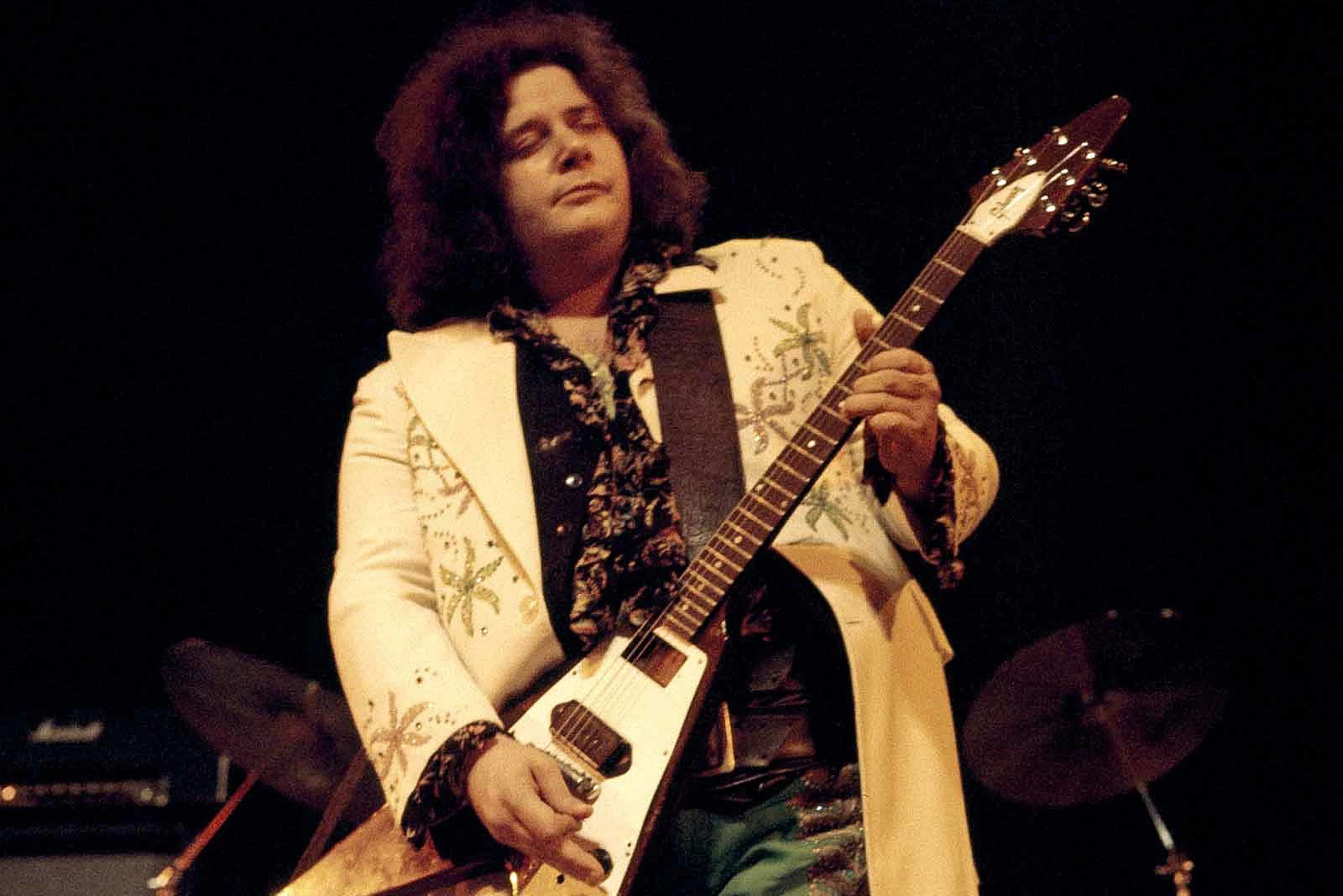
Another proponent of the P-90 is Leslie West of Mountain, who recorded the band’s legendary track “Mississippi Queen” with a P-90 equipped Les Paul Junior. West was such a fan of the P-90 sound that he even installed them in guitars that originally had the more favored humbuckers, such as the 1969 Flying V seen above.
Despite its numerous advantages, the P-90 is not without its limitations. It is susceptible to electromagnetic interference and can produce a noticeable 60 cycle hum, especially when used in high-gain settings. This is a common drawback shared with other single-coil pickups. In an attempt to mitigate this issue, some manufacturers have developed noise-canceling P-90s, but these innovations sacrifice some of the classic P-90 character.
In recent years, P-90 pickups have enjoyed a resurgence in popularity among guitarists and manufacturers alike. Many guitar companies now offer P-90-equipped models, and boutique pickup makers have produced their own versions with various voicings and tonal enhancements. Players continue to be drawn to the P-90’s distinctive sound and it’s easy to see why.
The P-90 pickup is just one of many pickup designs to choose from, yet it remains a popular choice for guitarists for over half a century. Its unique blend of characteristics, from its size and construction to its warm and punchy sound, have made it a cherished choice for musicians across various genres. As the guitar world continues to evolve, the P-90 pickup remains a beloved classic, proving that many designs of yesteryear have not only stood the test of time, but have become longstanding legends in their own right.
 IVG Blog