

By Randy “ToneMaster” Thompson
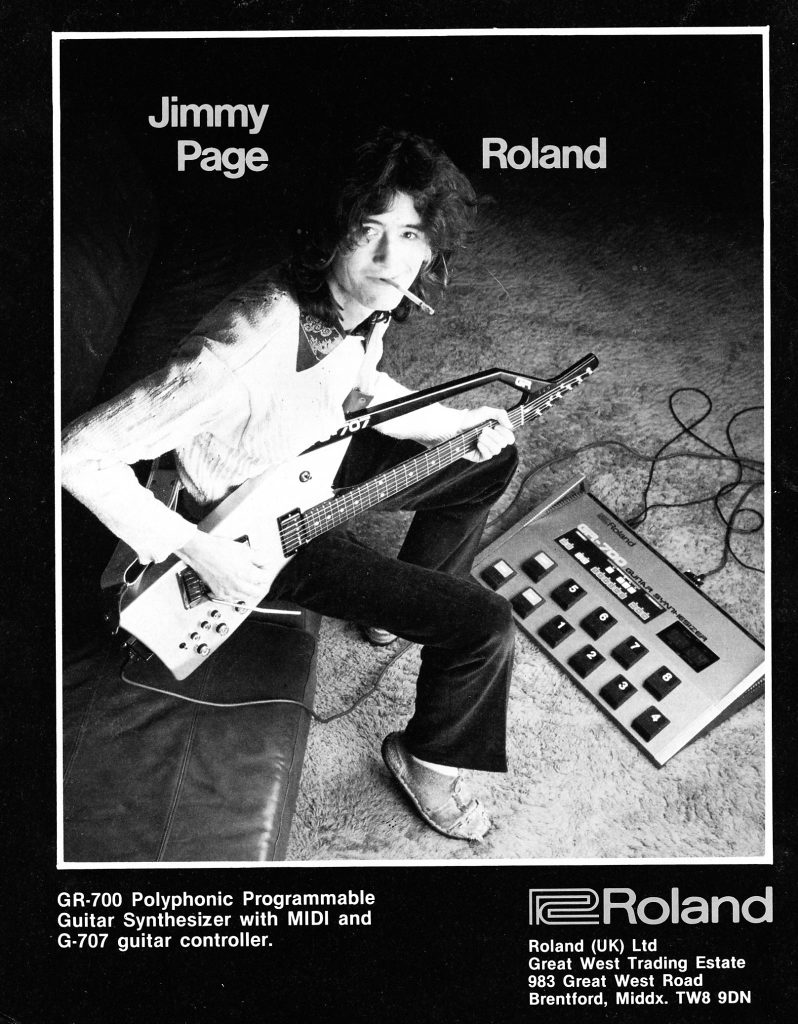
The 1980s marked a seismic shift in the music industry, not only in terms of fashion and culture but also in the realm of musical technology. One of the most groundbreaking innovations of this era was the advent of guitar synthesizers. These instruments, often seen as futuristic marvels, bridged the traditional world of guitars with the cutting-edge realm of synthesis, creating a sonic revolution that shaped the soundscape of the decade.
A Fusion of Analog and Digital:
Guitar synthesizers of the 1980s were a fusion of analog and digital technologies. At their core, these instruments utilized guitar pickups to translate the player’s notes into electrical signals. These signals were then converted into digital data, allowing musicians to explore a vast array of synthesized sounds. This amalgamation of analog feel and digital precision was a hallmark of 1980s guitar synths.
Do you have a guitar synth to sell? Contact us here!
Pioneering Brands and Models:
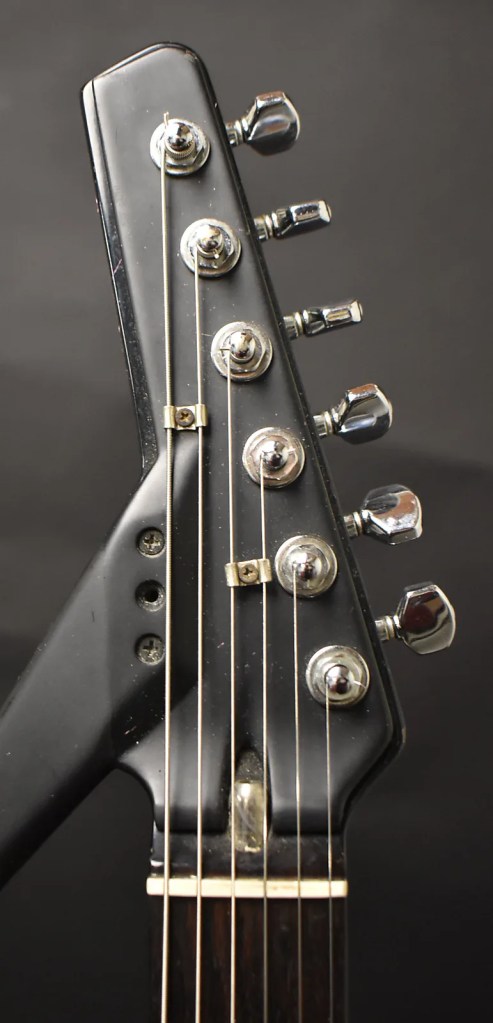
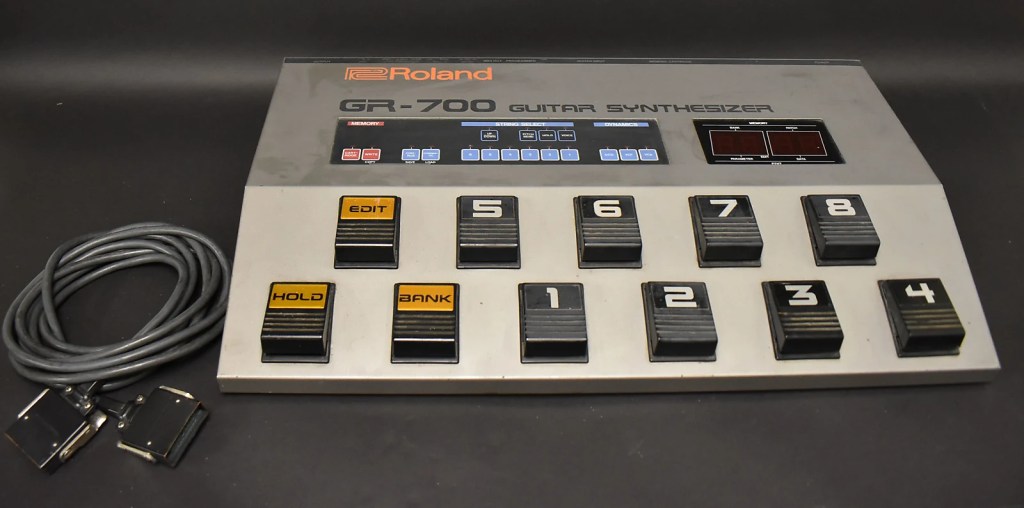
Several pioneering brands led the charge in the realm of guitar synthesizers during the 1980s. Roland, with their GR series, stood at the forefront. The GR-300, introduced in 1980, was a trailblazer, offering a unique blend of guitar and synth tones. Companies like Yamaha and Casio also entered the arena, producing models like the Yamaha G10 and the Casio DG series, each pushing the boundaries of what a guitar could achieve sonically.
Versatility and Sonic Exploration:
One of the key attractions of 1980s guitar synthesizers was their versatility. Musicians could emulate traditional instruments like pianos, strings, and brass, or dive into the realm of entirely new, otherworldly sounds. This newfound sonic palette allowed guitarists to explore uncharted territories, experimenting with sounds that were previously impossible to achieve with a standard guitar setup.
Influence on Music:
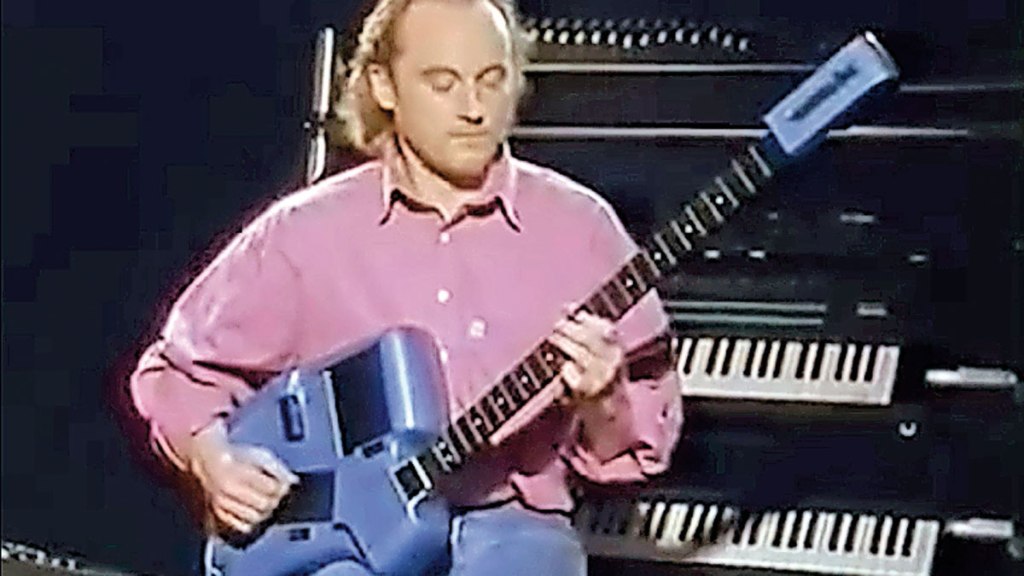
The impact of guitar synthesizers on music was profound. They found their way into various genres, from pop and rock to jazz and experimental music. Guitarists like Pat Metheny, Allan Holdsworth, and Andy Summers embraced these instruments, integrating synthesized tones seamlessly into their compositions. Iconic bands such as The Police utilized guitar synthesizers to create futuristic and atmospheric soundscapes, further embedding this technology into the mainstream musical consciousness.
Challenges and Legacy:
While guitar synthesizers opened new doors, they also posed challenges. The instruments were complex, requiring a steep learning curve for mastery. Additionally, tracking accuracy—the ability of the synth to accurately interpret the guitarist’s playing—was a perpetual challenge, although advancements were made as the technology evolved.
The legacy of 1980s guitar synthesizers endures. Their influence can be heard in contemporary music, where electronic and guitar-based genres continue to blend seamlessly. The sonic experimentation of this era laid the groundwork for future innovations, inspiring musicians and shaping the way we perceive the possibilities of the guitar. Today, the spirit of the 1980s guitar synthesizers lives on in digital modeling technology, ensuring that the fusion of guitar and synthesis remains a vibrant and integral part of the musical landscape.
Do you have a vintage guitar to sell? Contact us here!
 IVG Blog