
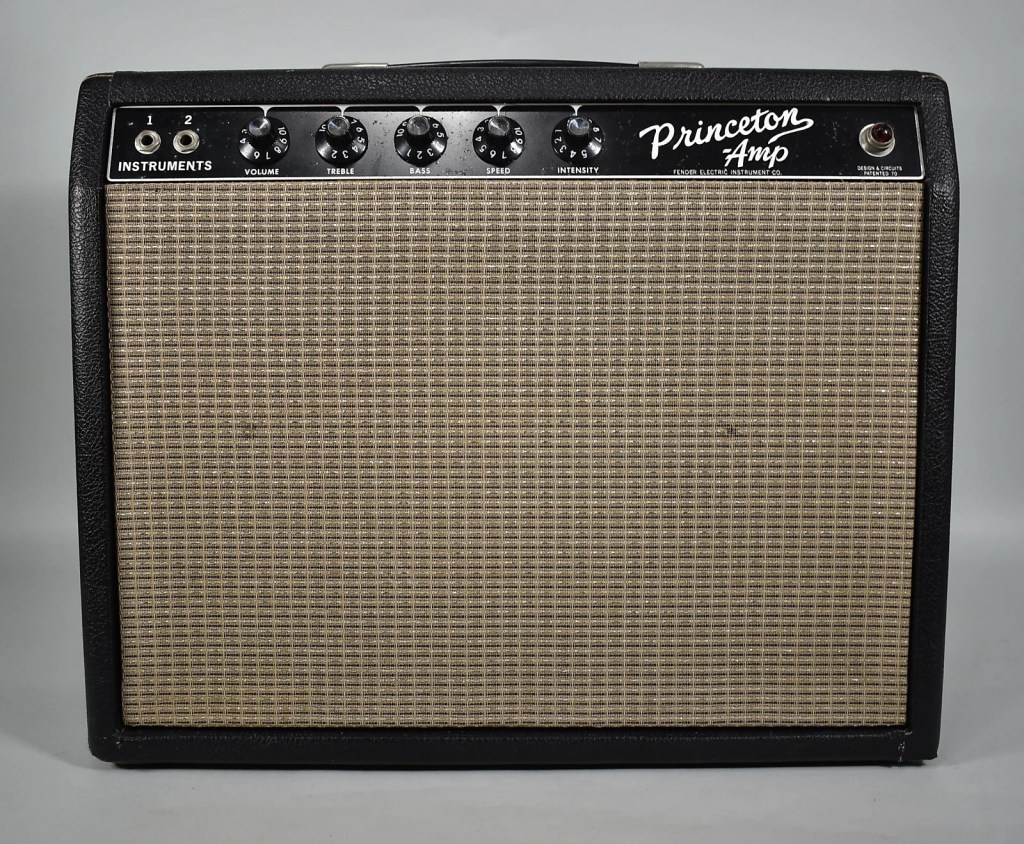
The Fender Princeton amplifier holds a storied history that dates back to the 1940s, making it one of Fender’s oldest and most enduring models. Over the years, this iconic amplifier has seen several iterations, each contributing to its legendary status among guitarists and musicians.
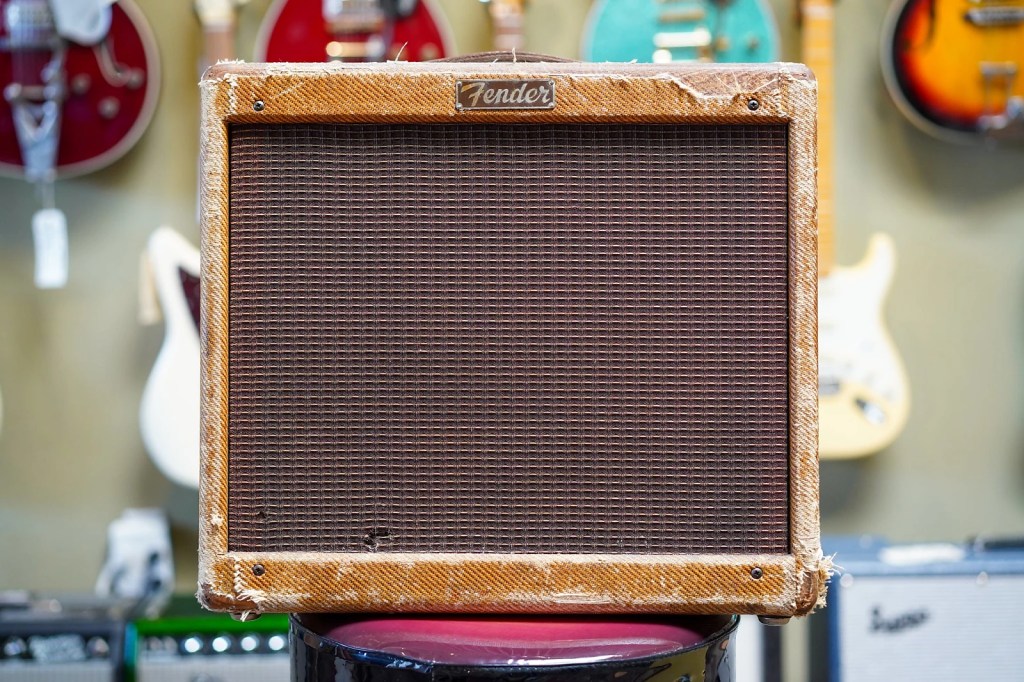
The Original Princeton:
The first Fender Princeton amplifier was introduced in 1942 as a compact, single-ended, 5-watt amplifier designed for use with lap steel guitars and Hawaiian-style instruments. Its initial purpose was to provide clear and clean amplification for these instruments, offering a portable and versatile solution for musicians. The original Princeton featured a simple control layout with volume and tone knobs, as well as a single 8-inch speaker.

The Brownface Era:
In 1961, Fender redesigned the Princeton, giving it the now-famous “Brownface” look. This era saw significant changes in the amplifier’s circuitry and aesthetics. The Brownface Princeton featured a brown control plate and brown tolex covering, which contributed to its distinctive appearance. The circuitry revisions resulted in a smoother, warmer tone with slightly more headroom, making it an appealing choice for both clean and lightly overdriven tones.

The Blackface Era:
The Brownface era was short-lived, as Fender made further modifications to the Princeton in 1964, ushering in the “Blackface” era. The Blackface Princeton saw a transition to a black control plate and a black tolex covering. The internal circuitry was refined, introducing a distinctive “blackface” tone that is characterized by its clear and bright sound, renowned for its pristine cleans and warm, yet tight overdrive when pushed. The Blackface Princeton became popular among studio musicians and gigging guitarists for its versatility and excellent recording capabilities.
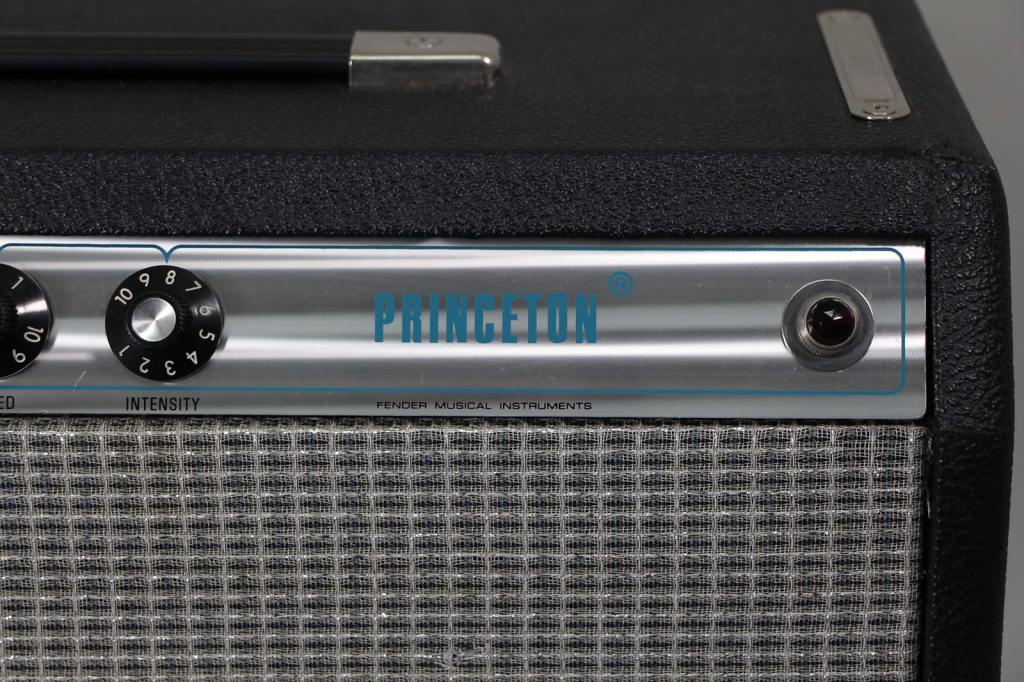
The Silverface Era and Beyond:
In 1968, Fender introduced cosmetic changes to their amplifiers, which included a change to a silver control plate and blue lettering, marking the “Silverface” era. Along with these cosmetic changes, Fender made minor modifications to the circuitry, but some enthusiasts argue that these changes resulted in a slightly different tonal character, with a perceived decrease in warmth and sweetness compared to the earlier Blackface models.

Reissues and Vintage Appeal:
In recent decades, Fender has released various reissues of the Princeton, catering to guitarists’ nostalgia for the classic tube-driven sounds of the original Blackface and Brownface models. These reissues strive to capture the essence of the vintage amplifiers while incorporating modern reliability and build quality.
Today, vintage Princeton amplifiers, especially the Blackface and Brownface models, remain highly sought-after by collectors and musicians alike. Their unique tonal characteristics and historical significance continue to captivate guitarists seeking timeless Fender tone in a compact and portable package.

The Fender Princeton amplifier has evolved over the years, leaving an indelible mark on the world of music. From its humble beginnings as a lap steel and Hawaiian guitar amplifier to its status as a revered classic among guitarists, the Princeton has consistently delivered exceptional tone and reliability. Whether it’s the vintage Blackface and Brownface models or the modern reissues, the Fender Princeton remains a beloved choice for musicians seeking a versatile and iconic amplifier that captures the essence of Fender’s legendary sound.
 IVG Blog