

Silvertone guitars hold a special place in the hearts of musicians and collectors alike. With their distinctive designs and unique tonal qualities, these instruments have left an indelible mark on the history of guitar manufacturing. From their humble beginnings to their iconic status, let’s embark on a journey through the captivating history of Silvertone guitars.
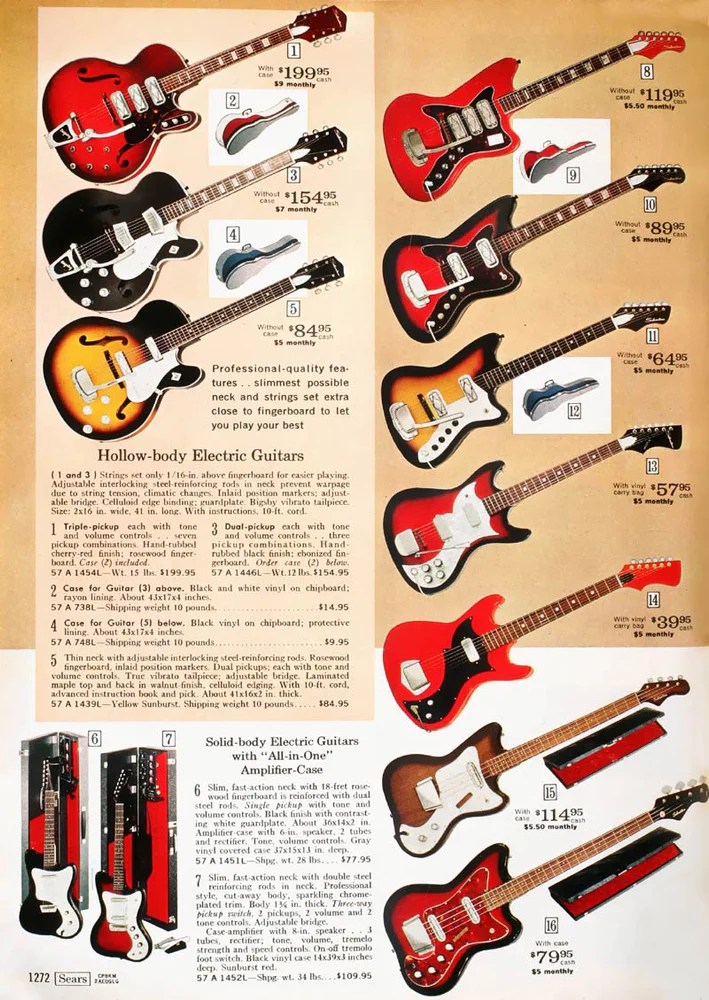
The story begins in the late 19th century when Sears, Roebuck and Co., a prominent American retailer, sought to expand its product offerings. In the early 1900s, the company introduced the Silvertone brand as a line of high-quality instruments, including guitars, banjos, and mandolins. These instruments were primarily manufactured in America by suppliers like Harmony, Kay, and Danelectro, with Sears acting as the exclusive distributor.
Silvertone guitars played a significant role in the rise of rock ‘n’ roll. In the 1950s and 1960s, as the genre gained popularity, many aspiring musicians gravitated towards Silvertone instruments for their distinct tone and affordability. The partnership with Danelectro resulted in the production of guitars with unique features like the “lipstick tube” pickups, which contributed to the signature Silvertone sound.

During the mid-20th century, Silvertone guitars gained popularity among aspiring musicians and amateurs due to their affordability and decent craftsmanship. The designs ranged from simple, entry-level models to more elaborate and stylish instruments. Many notable artists, including Bob Dylan, Jimi Hendrix, and Randy California of Spirit all began their musical journeys with Silvertone guitars, further contributing to the brand’s reputation.

One of the most iconic Silvertone models is the 1448, also known as the “Amp-in-Case” guitar. Introduced in the early 1960s, this unique instrument featured a small tube amplifier built into the guitar case. It offered a portable solution for musicians looking to practice or perform without the need for additional equipment. The 1448 became synonymous with the Silvertone brand and is highly sought after by collectors today.

Like many brands, Silvertone faced challenges throughout its history. In the late 1960s, Sears shifted its focus away from musical instruments, and the production of Silvertone guitars began to decline. The brand underwent several ownership changes, and its association with Sears eventually came to an end.
Despite these challenges, the legacy of Silvertone guitars endured. The instruments’ distinct aesthetic and sound attracted a devoted following, leading to a resurgence of interest in the brand in the late 20th century. Today, vintage Silvertone guitars are highly prized among collectors and enthusiasts for their historical significance and unique character.

In recent years, the Silvertone brand has seen a revival, with new models inspired by the classic designs introduced in the brand’s heyday. These modern iterations aim to capture the essence of the original Silvertone guitars while incorporating contemporary craftsmanship and features.
As we reflect on the history of Silvertone guitars, it becomes evident that these instruments have left an indelible mark on the musical landscape. From their humble origins as affordable instruments to their cultural significance in the rock ‘n’ roll era, Silvertone guitars have resonated with generations of musicians. With their iconic designs and distinct tonal qualities, Silvertone guitars continue to captivate and inspire musicians worldwide, ensuring that their harmonious legacy lives on.
 IVG Blog